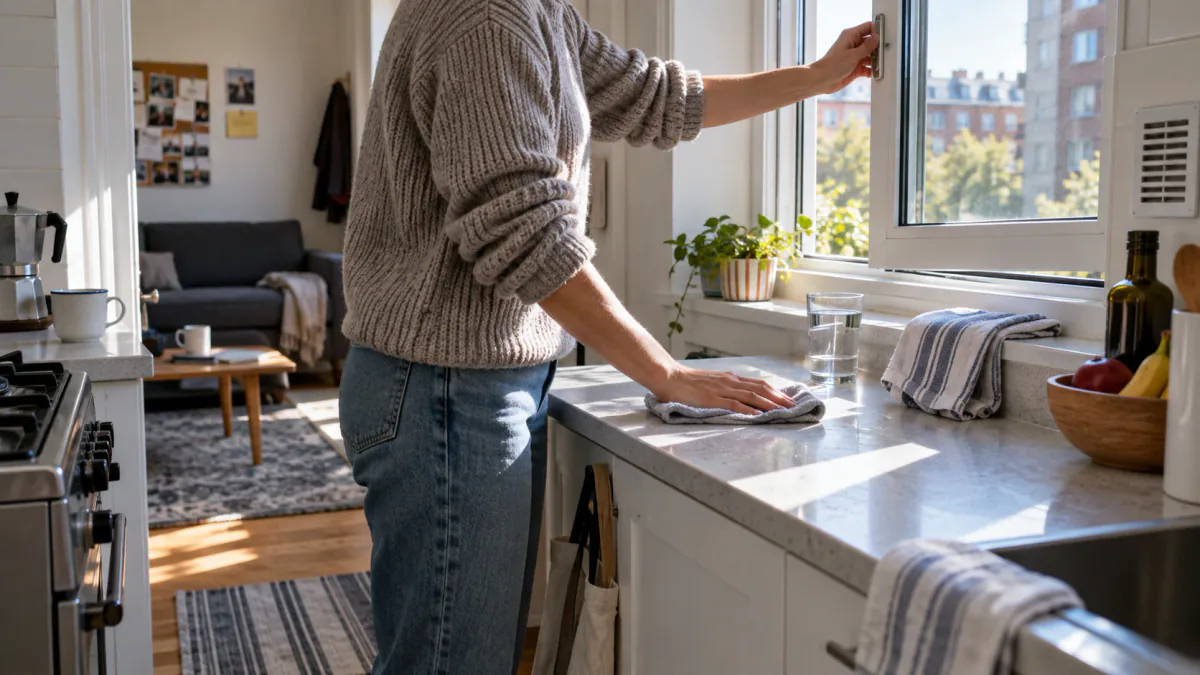
Start with conditions, not a perfect schedule
A renter's healthy-home routine should keep essential spaces usable and help identify problems that a tenant cannot fix alone. Walk through the home and note persistent moisture, blocked ventilation, pests, damaged fixtures or cleaning tasks that recur. Separate ordinary upkeep from conditions that need a landlord, building manager or qualified professional.
Choose small daily and weekly checks
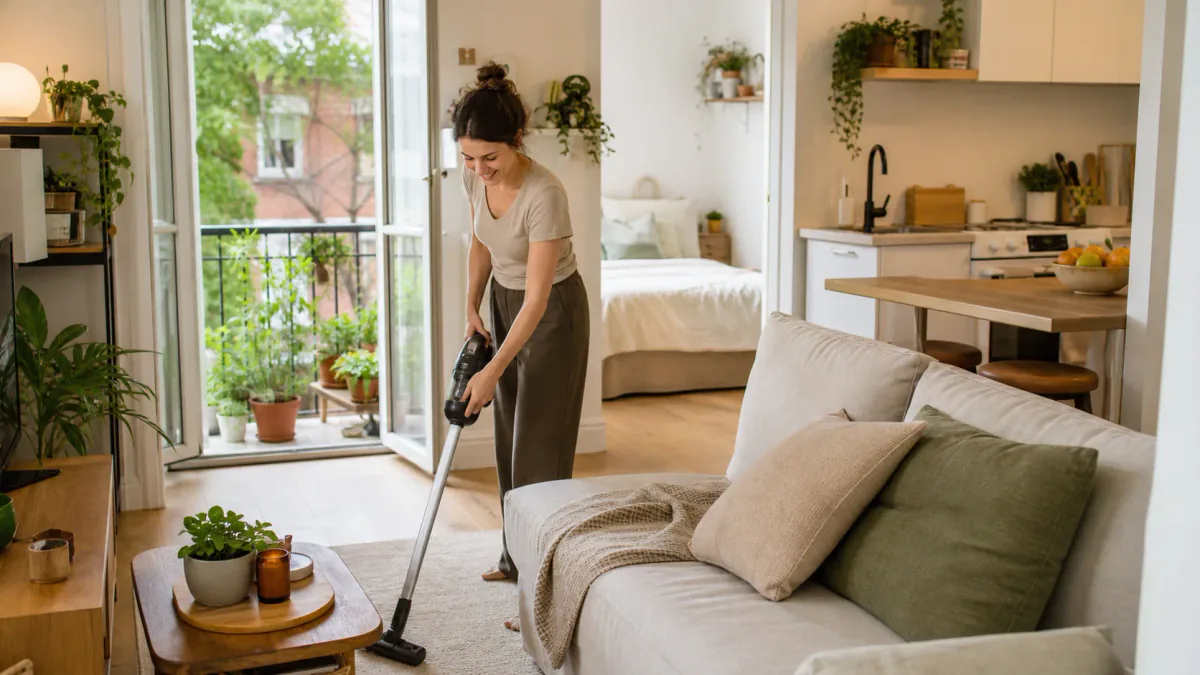
Daily: leave a clear exit route, handle food waste and restore the surfaces used for meals. Weekly: clean high-use surfaces according to their material instructions, check that bathroom and kitchen ventilation can operate as intended, and look for new leaks or damp spots. Adjust frequency to the household and local conditions; this is a planning framework, not a medical prescription.
Treat moisture as a source problem
If a damp area keeps returning, document where and when it appears and report it through the lease's maintenance process. Cleaning the visible surface without addressing a leak or moisture source may not resolve it. The CDC's mold resources explain why moisture control matters and provide guidance for different circumstances. Significant damage or health concerns warrant appropriate professional advice.
Keep products and records usable
Follow cleaning-product labels, keep chemicals in original containers and never mix bleach with other cleaners. Store maintenance requests, photographs and responses where you can find them. A realistic routine has a clear handoff: household cleaning for ordinary dirt, documented reporting for building conditions, and qualified help when the issue is beyond routine care.
Separate daily upkeep from building problems
Begin with two lists. The first contains routine actions within the household's control, such as removing waste, cleaning appropriate surfaces, keeping vents unobstructed and drying ordinary splashes. The second contains conditions that may require the property owner, building manager or a qualified professional: persistent leaks, damaged wiring, failed ventilation, recurring pests or visible material deterioration.
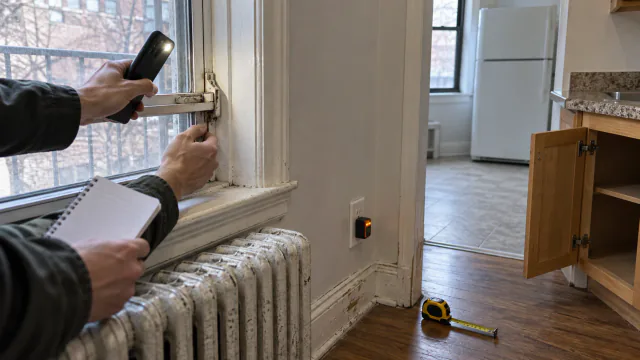
Do not treat a building defect as a housekeeping failure. Photograph the condition, record when it appears and follow the lease or local reporting process. Avoid opening walls, altering fixed equipment or applying an unverified treatment. For urgent hazards, use the appropriate emergency or professional channel rather than waiting for the weekly routine.
Build a short daily closing route
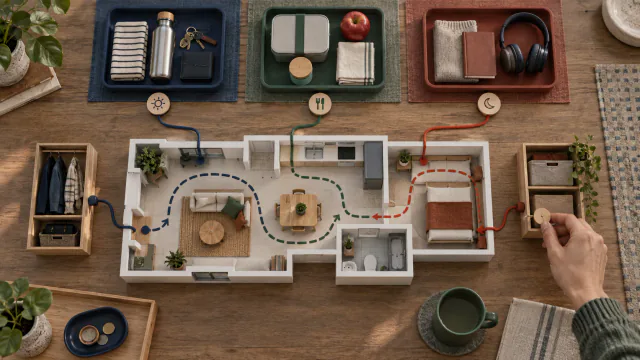
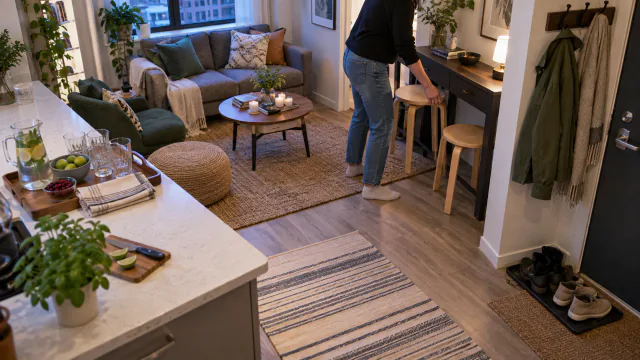
Choose a route that follows the apartment's actual use: kitchen, eating area, bathroom and entry. Put away food according to its storage requirements, deal with waste, return frequently used items and dry routine wet areas with suitable tools. Keep the route short enough to complete after a normal day and stop when essential functions are ready for morning.
Assign supplies near their tasks without compromising label directions or safe storage. A cloth used around food preparation should not be confused with bathroom equipment. Let reusable tools dry before storing them in a closed container. If one step is repeatedly skipped, change its location or timing instead of adding a larger checklist.
Plan weekly maintenance by zone
Divide the home into a few functional zones and give each a bounded task. One session might handle kitchen fronts and the clear preparation area; another might address bathroom fixtures and floor; another might inspect the entry and sleeping route. Follow surface and product instructions and avoid mixing cleaning products. The existing article's CDC source provides the retained chemical-safety boundary.
Add a quick inspection while the area is accessible. Look for water where it does not normally belong, damaged seals, blocked ventilation or a change that has returned after cleaning. Record patterns rather than diagnosing the cause. Early, specific reporting is more useful than a vague complaint after the condition has spread.
Manage routine moisture and airflow within your control
Use installed ventilation according to its instructions and keep grilles and appliance vents unobstructed. Dry ordinary spills promptly and avoid packing belongings tightly against an area that must remain accessible or ventilated. Observe condensation and odors at the times they occur so a report can include location, duration and relevant activities.
Routine actions cannot correct a leak, defective fan or structural moisture source. When moisture persists, damages materials or returns despite ordinary use, document it and contact the responsible property channel. Do not conceal the condition behind furniture or a storage product.
Create a simple property record
Keep the lease contact, maintenance method and non-emergency reporting steps together. For a problem, save the date, location, description, photographs and copies of communication. Note access arrangements and what changed after a repair. This record supports clear follow-up without turning the household routine into an investigation.
Review the routine monthly. Keep actions that reduce repeated friction, remove chores that do not serve the apartment's materials or household, and escalate conditions beyond renter upkeep. Update the record when contact details, building procedures or household needs change. A healthy-home routine should make ordinary care manageable while preserving a clear boundary around work that belongs to the building or a professional.