Verify the listing before paying
Before treating a viewing as a decision deadline, confirm who is offering the apartment and how they can be contacted through an independent channel. Compare the address and advertised terms with the property manager's or owner's own information. The U.S. Federal Trade Commission's rental-scam guidance recommends inspecting a property when possible and being wary of pressure to pay before you can verify a listing. Its examples are U.S.-focused; payment and tenant rules vary elsewhere.
Take the advertised rent, deposit, included services and move-in date to the viewing. If an agent changes a term verbally, ask for the revised term in writing before deciding. Do not send sensitive identity documents to an unverified contact merely because a listing requests them.
Inspect the apartment as you would use it
- Arrival: Check the route from the building entrance to the unit, including stairs, lifts and the path for your largest furniture item.
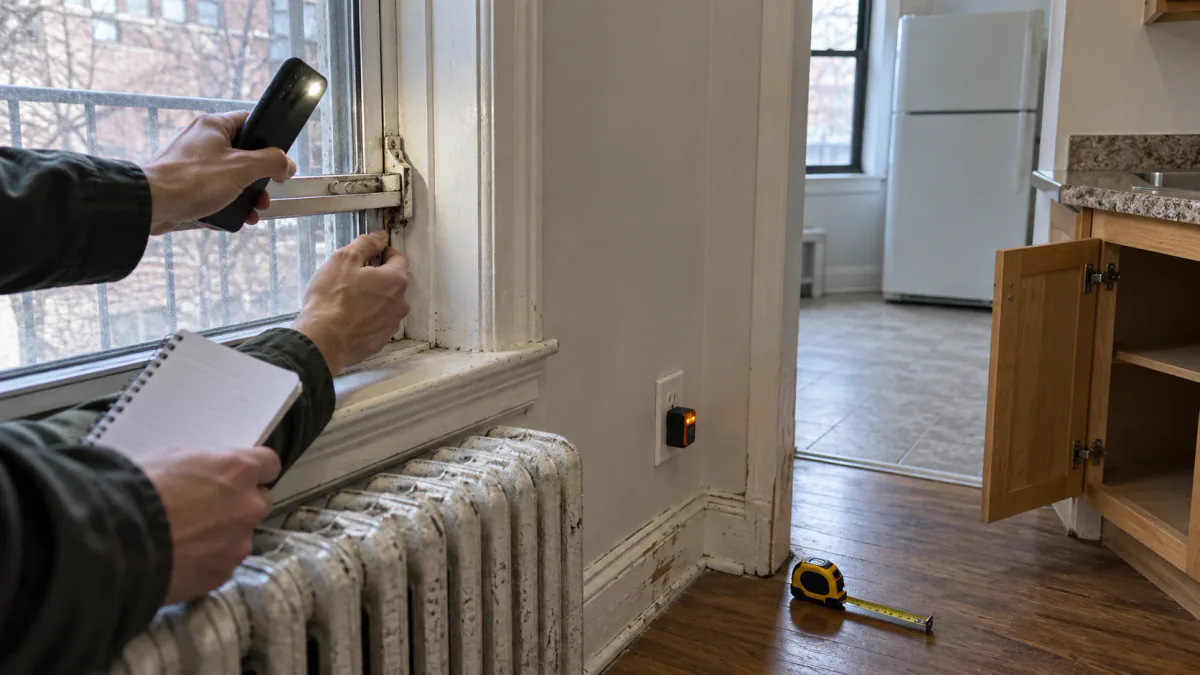
- Rooms: Measure the walls and openings that matter for belongings you already own. Open built-in storage, doors and windows when permitted.
- Water and appliances: Ask to test fixtures that are included with the rental. Record anything that does not work rather than assuming it will be repaired.
- Light, air and noise: Observe the conditions at the viewing time, then ask what you cannot verify from one visit.
Photograph visible condition only with permission. Keep your notes tied to the exact unit, not to a model apartment or staged photos. A good-looking room may still have an awkward furniture route, limited usable storage or a noisy shared wall.
Compare total recurring and move-in costs
Make a short table for every apartment you are seriously considering: advertised rent, required fees, deposit, utilities you must arrange, parking or storage charges, and the date each payment is due. Mark any amount that is still unknown. A lower advertised rent may not mean a lower monthly total if essential costs are excluded.
Ask which charges are refundable, what conditions apply, and where those terms appear in the written agreement. This checklist is a comparison aid, not a statement of local tenant rights; use the actual lease and reliable local guidance for legal questions.
Resolve the written agreement before signing
Read the clauses for repairs, entry, alterations, pets, guests, renewal, notice and move-out condition. Put every promised repair or exception into the appropriate written document. If a rule affects your planned use of the space, do not rely on a casual assurance that it will probably be allowed.
Leave with three lists: verified facts, unanswered questions, and deal breakers. Do not convert an unanswered question into a positive assumption. If the identity of the person collecting payment, the condition of a key fixture or a material lease term remains unclear, pause the decision until you have evidence you can keep.
Verify the listing and the person offering it
Compare the address, advertised rent, included features and contact information across the listing and an independent property or management source when one is available. Be cautious when details change without a written explanation or when payment is pressured before the property and offer can be verified. The article's FTC source describes common U.S. rental-listing scam patterns; procedures and rights vary by location.
Keep copies of the listing and messages. Ask who will sign the lease, who receives payments and how maintenance is requested. Do not send identity or financial information through an unverified channel. If an in-person viewing is not possible, seek a live, property-specific verification method and independently confirm the party involved.
Inspect the apartment by routine
Walk from the entrance to the kitchen, bathroom, sleeping area and exits as though carrying groceries or laundry. Open permitted doors, cabinets and windows; observe door swings, fixed equipment and the space needed by your essential furniture. Measure only with permission and record dimensions that determine whether a bed, table or accessibility need can work.
Test installed fixtures and appliances when the viewing permits it. Note visible damage, odors, stains, pests, missing screens or signs of a current leak without diagnosing their cause. Ask what will be repaired before occupancy and request that agreed work, timing and responsibility be documented.
Review building and neighborhood use
Locate entrances, mail, waste, laundry, bicycle or vehicle storage and any shared amenity included in the offer. Ask about access hours, booking, fees and building rules. Check the route from the unit to the street and consider how deliveries, moving and regular transport will work.
Visit or research the immediate area at times relevant to your routine when practical. Verify transit, parking or essential services through current official sources rather than relying only on listing language. Decide which conditions are essential and which are preferences before the pressure of signing.
Calculate total recurring and move-in costs
List rent alongside required utilities, building fees, parking, insurance if applicable and services not included. Separate recurring costs from deposits, application charges, moving expenses and necessary setup purchases. Use the actual terms offered and ask how variable charges are calculated.
Record due dates, accepted payment methods and any stated conditions for deposits or concessions. Do not assume a promotion continues throughout the lease. If a cost or responsibility is unclear, obtain clarification in writing before treating the apartment as affordable.
Read the documents against your notes
Compare the lease and required addenda with the listing, viewing notes and written promises. Look for the correct unit, rent, term, occupants, included services, pet or smoking rules, maintenance method, entry provisions and move-out expectations. Local legal requirements differ, so obtain qualified local help when a term or right needs interpretation.
Do not rely on a verbal assurance that conflicts with the written agreement. Ask for corrections or written additions through the proper party. Keep a complete copy of every signed document and the condition record. Sign only when the identity, apartment, costs, important rules and agreed work align with the decision you intend to make.