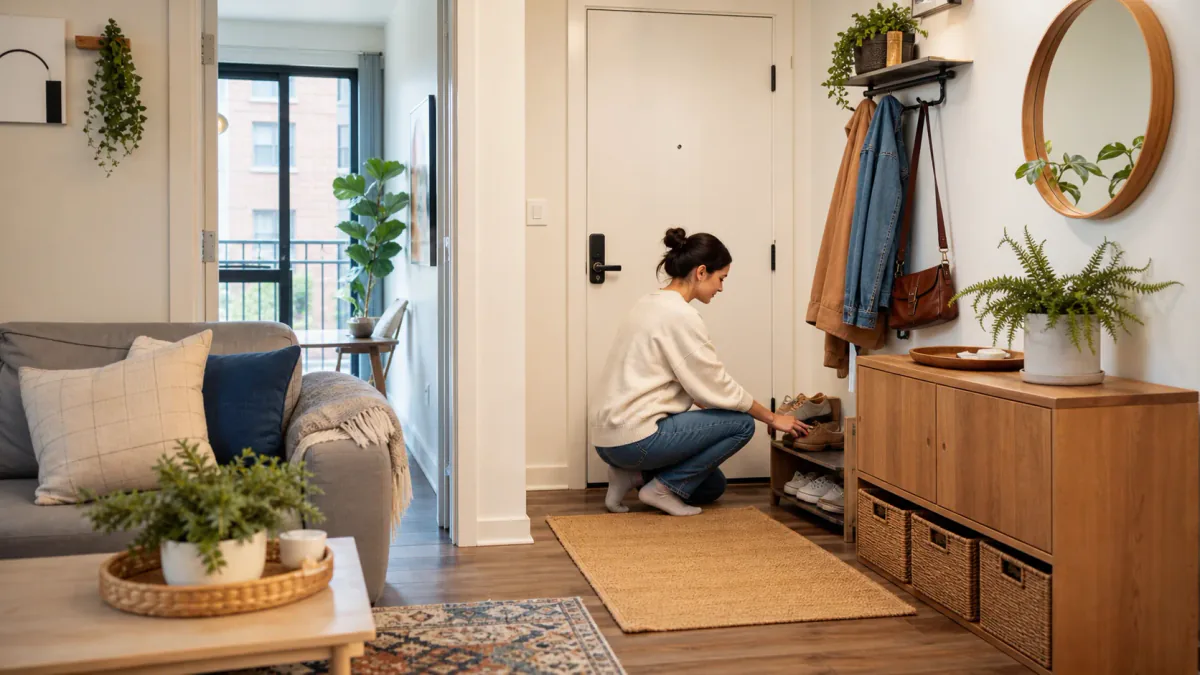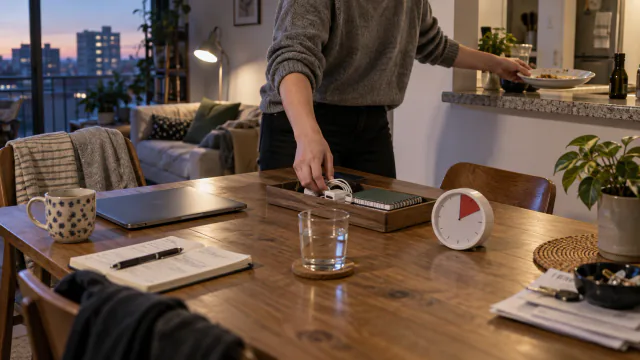
0–5 minutes: empty the landing zone
Move shoes, bags, mail and outgoing items to a temporary spot where they will not block the door. Check whether the entryway is also a shared path, a fire exit route or the swing space for a closet door. Keep those functions visible throughout the reset. Do not start by buying a bench or rack.
5–15 minutes: sort by next action
Make four groups: items used on every departure, items waiting to leave the home, papers requiring a decision, and objects that belong elsewhere. Return the last group immediately. Recycle obvious junk mail according to local rules, but leave important documents in a deliberate review place rather than hiding them in a decorative tray.
Limit the everyday group to what the entryway can hold without blocking passage. Off-season coats and spare shoes can live in a closet if the household does not need them at the door.
15–25 minutes: assign homes
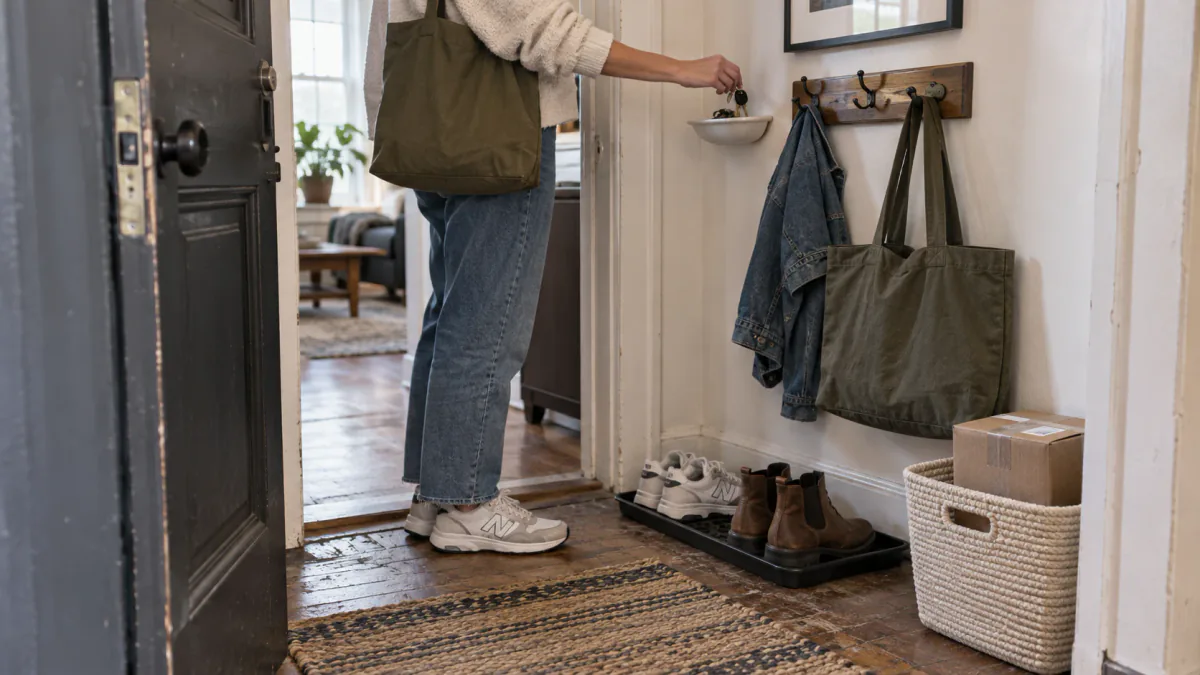
Place keys where a person naturally pauses after entering. Give active shoes a washable or easy-to-clean area. Put bags where their straps will not catch a handle or trip someone. Use a small, clearly marked spot for items that must go out tomorrow. If the door needs the same wall space as a hook, the door wins.
Test the placement while carrying a bag. Can you enter, close the door and put things down without moving another object? If not, reduce the number of categories at the threshold.
25–30 minutes: clean and check
Clean the exposed surface with a method suitable for its material, then return only the assigned items. Photograph the result if a before-and-after reference helps your household, but judge it again after a normal arrival. The entryway succeeds when the next departure is easier and the route stays clear, not when every object is hidden for a picture.
Prepare three destinations before the timer starts
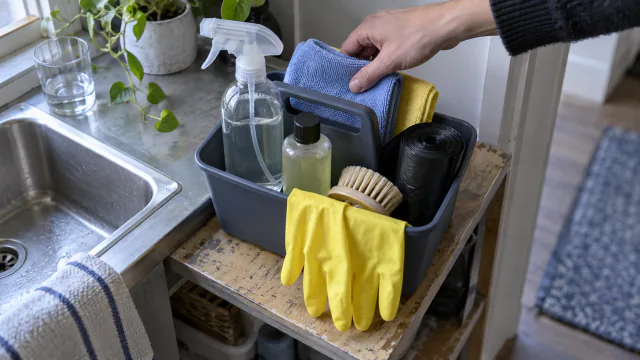
Set out one container for items that belong elsewhere, one for items leaving the household and one for decisions that require another person. Keep the doorway and exit route clear while using them. Gather a tape measure and a cloth suitable for the actual entry surface, but postpone repairs and installation.
Take a quick starting photograph and write the entry's essential jobs: opening the door fully, moving through safely, storing current shoes and finding keys or transit items. These jobs determine what returns after sorting.
Use the first ten minutes to clear the route
Remove rubbish and obvious items from other rooms, then move shoes, bags and deliveries out of the door swing. Do not begin reorganizing a closet. If something has no known home, place it in the decision container so the route can be evaluated without making a rushed permanent choice.
Open the door fully and walk the route while carrying a typical bag. Check nearby drawers, closet doors and seating. Mark any collision that remains. Safety and access come before the appearance of the landing surface.
Use the middle ten minutes to set capacity
Return only the footwear and outerwear needed for the current season and routine. Give the available rack, tray or shelf a clear limit. Move occasional items to their existing appropriate storage rather than compressing everything into the entry.
Assign one landing point for keys and other daily carry items along the natural arrival route. Test it while holding a bag. If it requires crossing the room or opening several lids, simplify the return action before buying an organizer.
Use the final ten minutes to test and close
Clean the now-accessible surface according to its care requirements, return the current items and walk the route again. Deal with the elsewhere container immediately. Label the decision container with a review day rather than leaving it in the entry.
Compare the result with the essential jobs and photograph it for reference. If the door, route and daily landing point work, stop when the timer ends. A decorative improvement can wait; the reset has achieved its purpose.
Keep the entry working after the reset
Use a short cue tied to arrival or a weekly schedule: return keys immediately, move deliveries after opening them and review shoe capacity on the same day each week. When an item repeatedly lands outside the system, change its assigned location or the category limit.
Repeat the full thirty-minute process only when the function declines. A stable entry should need brief returns, not constant reorganization. If the available area cannot safely hold the required mobility equipment, work gear or household items, seek a layout or building-specific solution rather than narrowing the route.