Start with the surfaces you clean
List the actual surfaces in the studio: for example, a laminate counter, sealed floor, bathroom fixture and glass mirror. Read the care instructions for each surface and the labels on cleaners you already own. A compact caddy should carry the tools for ordinary weekly cleaning, not every specialty product in the home.
Set aside anything expired, unlabeled or unsuitable for its intended surface according to local disposal instructions. Do not pour different cleaners together to save bottle space. The CDC warns that bleach should never be mixed with other cleaners or disinfectants.
Build a core kit around the route
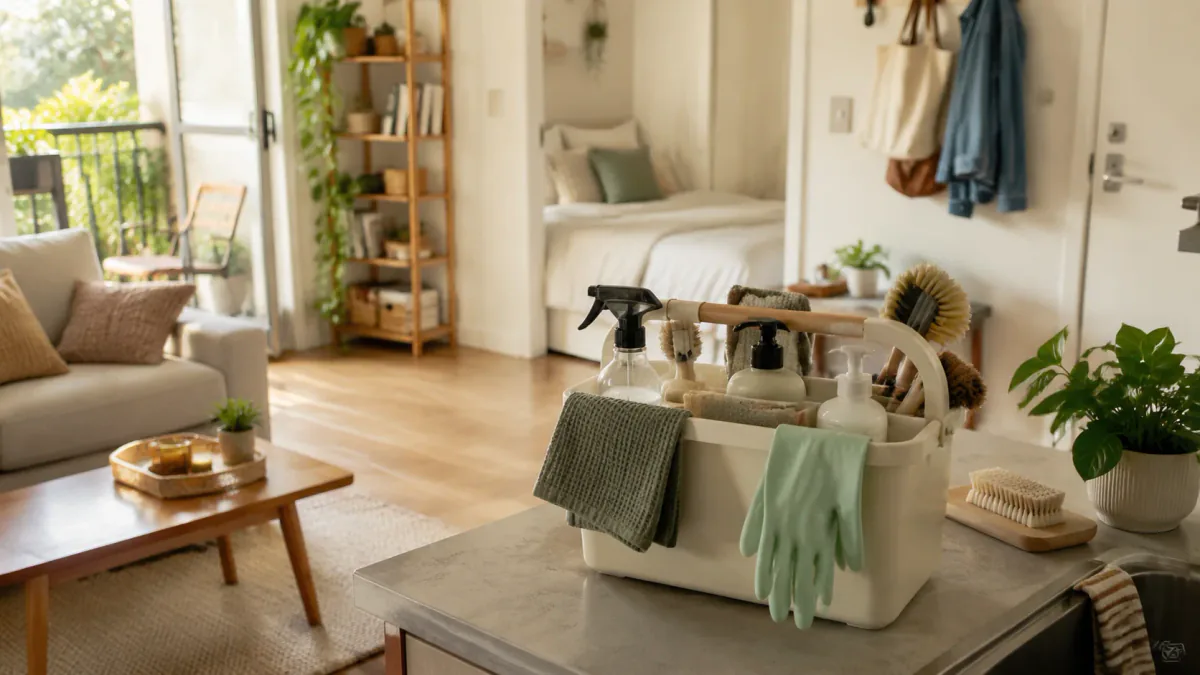
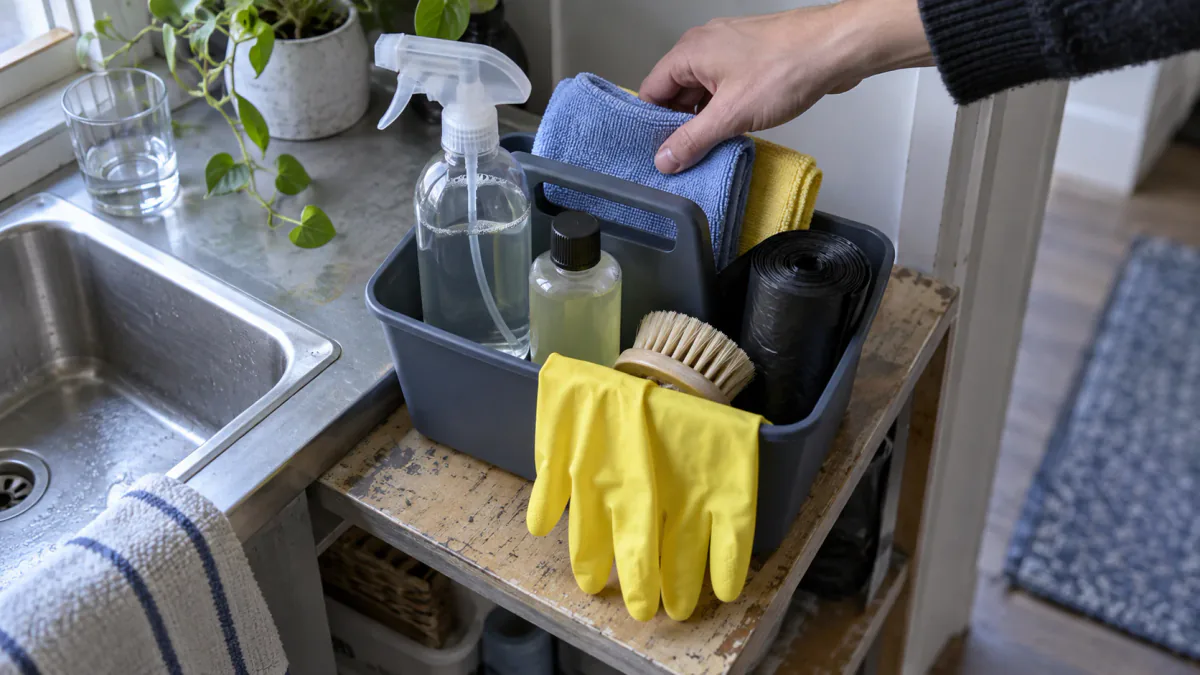
For many studios, washable cloths, a small brush, gloves, trash bags and one or two properly labeled cleaners will cover the routine. Your kit may be smaller or different depending on materials and household needs. Keep wet cloths out of the caddy until they have been washed and dried.
Choose a caddy only after measuring its storage spot and the narrowest path you will carry it through. A lightweight handled container that fits an existing shelf is more useful than a large organizer that becomes another floor obstacle.
Keep special cases separate
Store products that require special handling according to their labels and away from children or pets. Keep chemical containers in their original packaging so instructions and warnings remain available. Do not decant a cleaner into a food or drink container. A product used only for an occasional task can stay in its safe storage place rather than making the daily caddy heavier.
Run the routine once
Carry the caddy through a normal clean: clear the counter, wipe the approved surfaces, clean the bathroom and deal with trash. Note every tool you used and anything you had to fetch. Remove unused duplicates and add only a genuinely missing tool. Return the kit to its assigned shelf; if the container is too heavy or wet to store there, revise the kit before buying a bigger caddy.
Separate routine cleaning from special jobs
Make a short route for the tasks done every week: collect waste, wipe approved kitchen surfaces, clean bathroom fixtures, dust and finish the floor. Put only the tools for that route in the caddy. Oven treatment, drain maintenance, stain removal and other occasional work can remain in safe product storage with their instructions.
This separation prevents the caddy from becoming a chemical archive. It also makes missing supplies obvious. If the weekly route requires one item from another cupboard, decide whether it belongs in the kit; if it is used only once a month, leave it where it is.
Assign a clean side and a used side
Keep unused cloths and brushes away from damp or soiled ones. A washable bag or small ventilated container can receive used textiles during the route, provided it is emptied immediately afterward. Never return a wet cloth to a closed caddy. Wash and dry reusable tools according to their care instructions before restocking them.
Check the bottom of the container for leaks after every use. Keep bottles upright in their original labeled packaging and do not rely on the caddy to contain an incompatible spill. Product labels determine safe storage, ventilation and protective equipment.
Write a room-by-room sequence
In a studio, one pass is usually easier than repeated trips. Start by opening the safe ventilation available for the products being used, then collect loose waste and items that belong elsewhere. Work from relatively clean surfaces toward dirtier ones and from higher surfaces toward the floor where appropriate. Follow product contact times and surface instructions rather than wiping every product immediately.
Keep food preparation tools away from bathroom cleaning tools. If a single caddy makes that separation unclear, use color-coded cloths or a small removable bathroom module. The distinction should be understandable without remembering a complicated system.
Size the caddy for its parking place
Measure the shelf height, depth and opening, including hinges or pipes that reduce usable room. Load the proposed kit into a box of similar size and carry it through the apartment. It should remain stable when lifted, fit without forcing the shelf and leave labels readable. A container that must live on the floor creates its own cleaning obstacle.
Keep frequently used tools near the handle and heavier bottles low. Do not stack products so tightly that one must be removed to read another's instructions. If safe storage requirements conflict with convenience, split the kit and prioritize safety.
Reset and audit the kit
After cleaning, empty waste, separate textiles, rinse approved tools and let everything dry. Wipe the caddy itself and return only clean, dry equipment. Note products that are low without combining remnants or transferring them to another container.
Every few weeks, compare the contents with the actual route. Remove unused gadgets, replace worn tools and verify that labels remain readable. The kit is successful when it supports the full routine, stores safely in one assigned place and can be reset without creating another pile.