Pick a finish line before the timer
A ten-minute reset cannot clean an entire home. Decide what must be ready for tomorrow: a usable kitchen counter, an open walking route and the items needed at the door. Write those three outcomes down if the routine tends to expand. Laundry, deep cleaning and rearranging furniture belong on another list.
Minutes 0–3: clear the routes
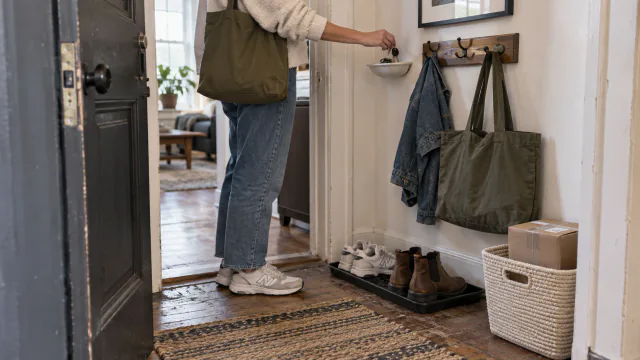
Carry dishes to the kitchen, put shoes in their assigned spot and move loose items off the route between bed, bathroom and exit. Do not stop to sort a drawer. Use one small basket for objects that belong elsewhere, then return those objects before the reset ends. If the basket is always full, the missing storage assignment is a separate problem to solve.
Minutes 3–7: restore one working surface
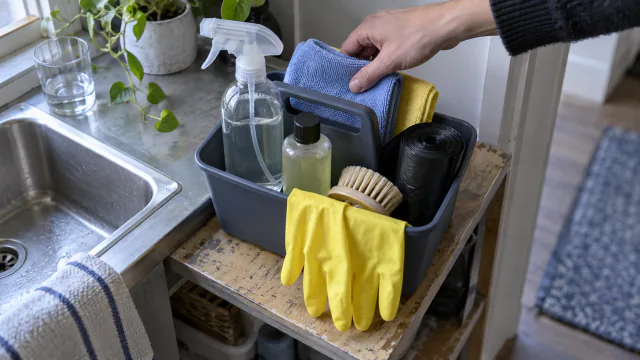
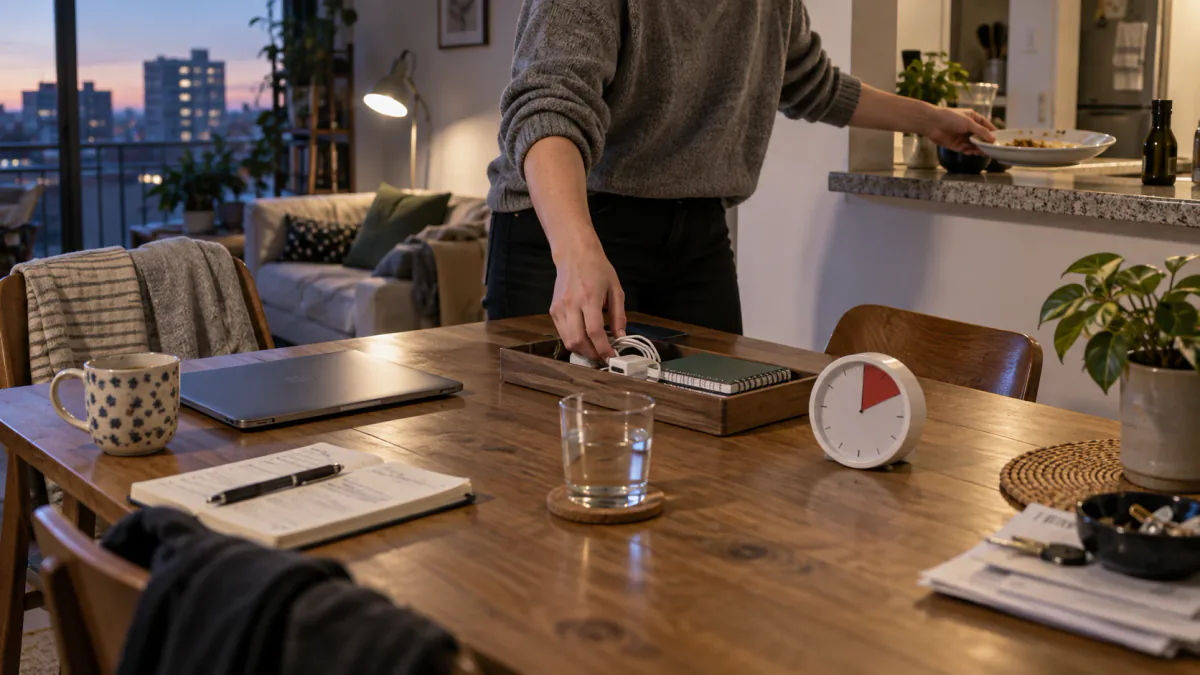
Choose the surface that starts the next day: a breakfast counter, desk or table. Put away only the items that interrupt its next use. Wipe it if the surface and available time call for it, using a product suitable for its material. Leave unrelated papers for a planned review rather than making hasty decisions at night.
Minutes 7–10: set up the morning
Place keys and the bag you need at the exit; check any item that must leave with you. Return the basket, cloth and tools to their homes. Stop when the timer ends. A repeatable small routine is more useful than a nightly task that silently becomes an hour.
If ten minutes is consistently insufficient, observe what consumes the time. A crowded counter may need a better daily storage spot; dishes may need to be handled after meals; an overflowing entryway may need fewer items. Adjust that cause rather than extending the timer indefinitely.
Prepare the reset before you need it
Choose the three functions that must be ready in the morning, such as a clear route to the bathroom, a usable kitchen counter and an entry where keys can be found. Give each a visible finish condition. Keep a small return basket available for objects that belong in another room, but do not use it as permanent storage.
Remove tasks that require decisions, repairs or deep cleaning from the ten-minute routine. Write them on a separate list. The reset should restore ordinary use after an ordinary day; it cannot compensate for a category that exceeds its storage or a building problem that needs reporting.
Match the minutes to your home's pressure points
Keep the total at ten minutes but adjust the stages after observing several evenings. A cook may need more time for the kitchen close, while someone working from home may need more time to pack the desk. Use a timer as a stopping boundary rather than a demand to rush with hot, sharp or fragile objects.
Within each stage, handle the items that restore function first. Clear the walking route before arranging cushions. Put away food before sorting papers. Return medications or other important items according to their normal safe storage rather than dropping them into the general basket.
Handle an interrupted or exhausted evening
Create a minimum version for difficult days: protect the exit and bathroom route, deal with food and waste, and place tomorrow's essential item where it belongs. Stop there. The following evening, resume the normal sequence instead of doubling the session as punishment.
If the same stage is unfinished three times, inspect its cause. The storage may be too far away, the category may be over capacity or the task may belong in a weekly routine. Change the system rather than adding motivational language to a step that does not fit.
Review the reset after one week
At the end of the week, count how many mornings began with the three chosen functions available. Note which objects repeatedly remained out and where they were used. Move a return point closer or reduce a category only when this evidence identifies the problem.
The routine is successful when it ends on time, leaves safe routes clear and makes the next morning easier. It does not need to clean every surface or hide all signs of daily life. Preserve the stopping point so the reset remains repeatable.