Check whether the door can carry anything
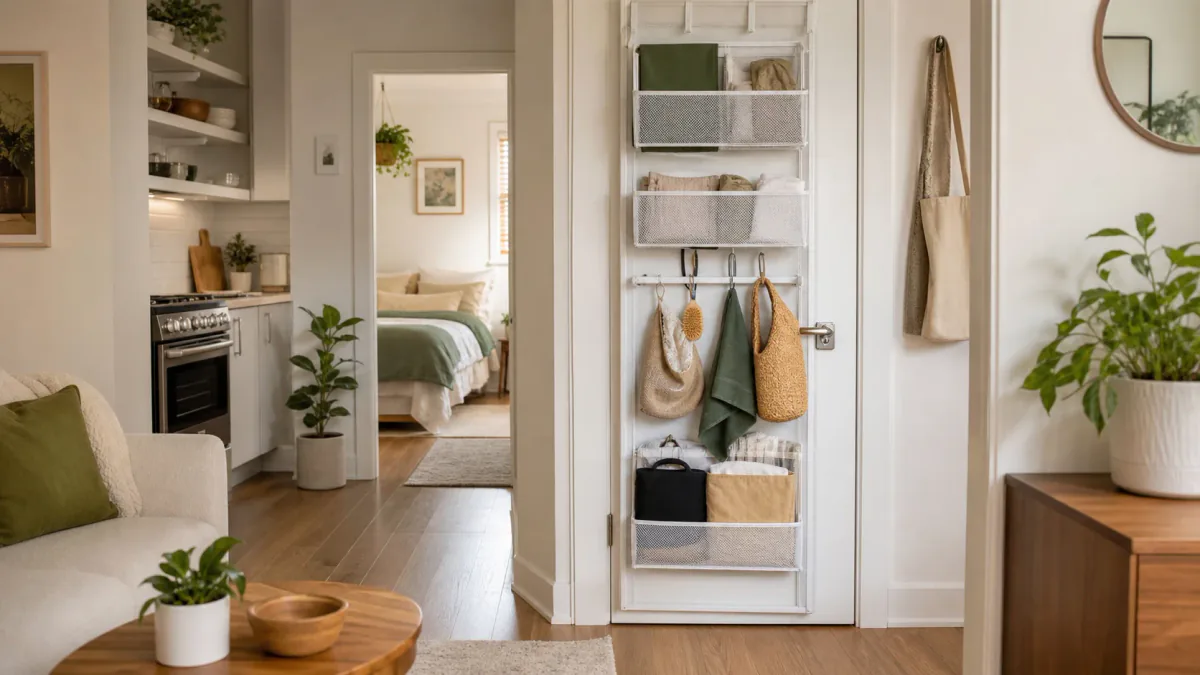
Open the closet door fully and measure its clearances at the top, bottom and handle side. Look at the hinge movement, nearby wall and the path people use when the door is open. An over-door rack that technically fits can still strike the frame, prevent a full close or make a narrow passage harder to use.
Follow the rack or hook manufacturer's stated load and door-thickness limits. A hollow or damaged door, an uncertain hinge, or a rental restriction is a reason to choose another location. Do not drill or modify a door without checking the lease and the door's construction.
Assign one lightweight category
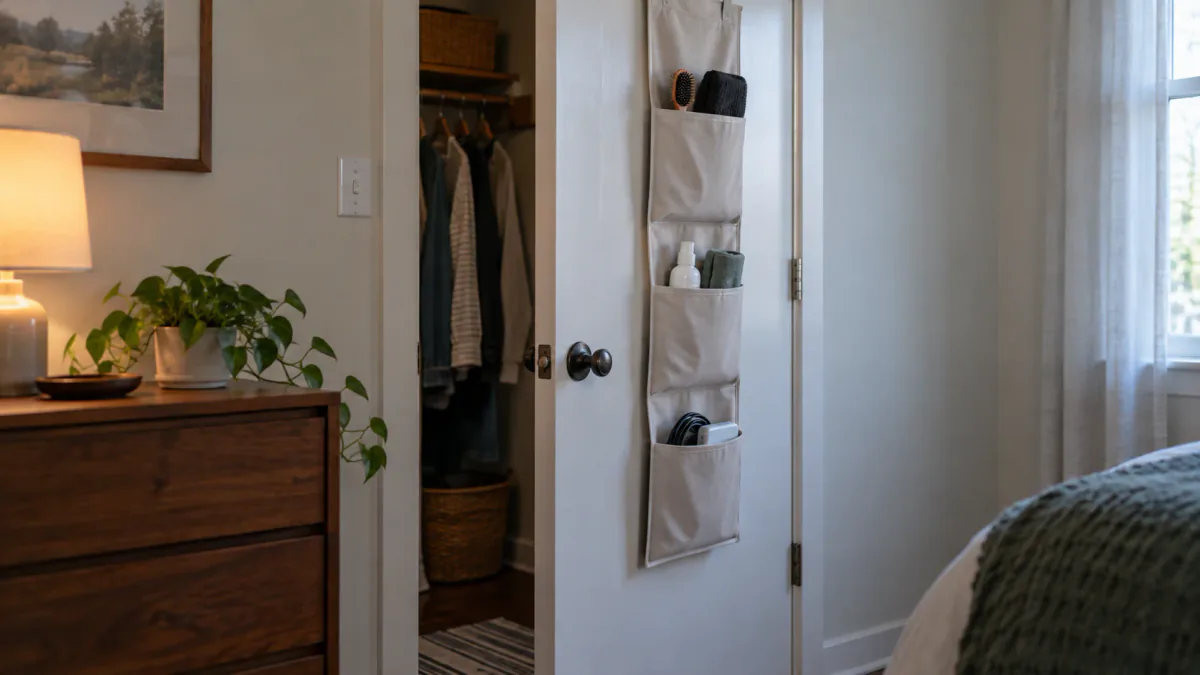
Door storage is most useful for small items that are easy to see and remove: a few scarves, cleaning cloths, belts or light accessories. Put frequently used items at a comfortable height. Avoid heavy bottles, breakables and bulky bins that swing when the door moves.
Choose a category before choosing the organizer. If the closet already has a free shelf, a shallow tray there may be quieter and easier to maintain than adding hardware to the door.
Control what is visible from the room
Decide whether the storage will be seen when the door is open during daily use. Repeated identical pockets can make a category easy to scan, but transparent pockets filled with mixed objects can look busier than a closed box. Keep only the amount that fits without bulging. Leave labels readable and avoid stacking items in front of one another.
If the closet door faces the bed or a work area, test the view at the time you use that space. A tidy-looking arrangement on the inside of a closed door may become visual clutter when it stands open.
Test the motion for a week
Open and close the door normally, including when carrying laundry. Listen for scraping and check that nothing falls or catches. Can you reach the item with one hand and return it without reshuffling the organizer? If access is worse, reduce the load or move the category to a fixed shelf. The goal is a useful retrieval point, not maximum door coverage.
Map every clearance before choosing hardware
Measure the door thickness, width and height, then measure the gap above it and between the closed door and the contents behind it. Check trim, automatic closers, hooks and the handle. Open the door through its full arc and mark anything an organizer could strike. Repeat the test with nearby drawers open and with a person standing where they normally dress or sort laundry.
For sliding or bifold doors, an over-door product may prevent normal movement entirely. A fixed wall, shelf end or interior closet panel may be a better location, but only when its construction and the product instructions support the intended attachment. Record the dimensions and take a photo before shopping so a promising product is judged against the door rather than the package image.
Design one category around how it is used
List the objects in the proposed category and remove anything too heavy, fragile or rarely needed. Then arrange the remainder in the order of the routine. Daily accessories belong between shoulder and waist height; occasional light items can sit higher; nothing should trail near the floor. Give every pocket or hook one clear job and leave unused capacity instead of filling every opening.
Consider the return action as carefully as retrieval. A narrow pocket may hold a belt neatly but be annoying to use with one hand. A hook may be perfect for tomorrow's outfit but become a permanent pile. Test the organizer with safe stand-ins for several days, returning each item after use. If objects are routinely placed somewhere else, the category or location is wrong.
Reduce visual noise without hiding the problem
Choose a limited visual vocabulary: one material, one pocket style or a small set of quiet containers. Group similar shapes together and keep labels short. Transparent pockets help when recognition matters, while opaque pockets calm mixed small objects; neither works if items bulge beyond the edges. Leave a band of empty door visible so the arrangement reads as one zone rather than a wall of storage.
View the open door from the bed, desk and entrance. If the organizer becomes the room's dominant feature, reduce the number of categories or move the least attractive supplies to closed storage. Do not buy matching containers until the trial proves how many are actually needed.
Maintain the system with a capacity rule
Set a limit the organizer itself can enforce: one scarf per hook, one row of cleaning cloths or one pocket per accessory type. During a monthly reset, remove items that migrated into the wrong pocket and check for rubbing, loose hardware, door sag or damaged finishes. Stop using the product if the door no longer moves normally.
The finished system should let the door open, close and latch without extra effort; keep the handle and walking route clear; make one routine faster; and look orderly from the room. If it meets only the capacity goal, use less of it or choose fixed storage instead.