Measure the window as a growing place
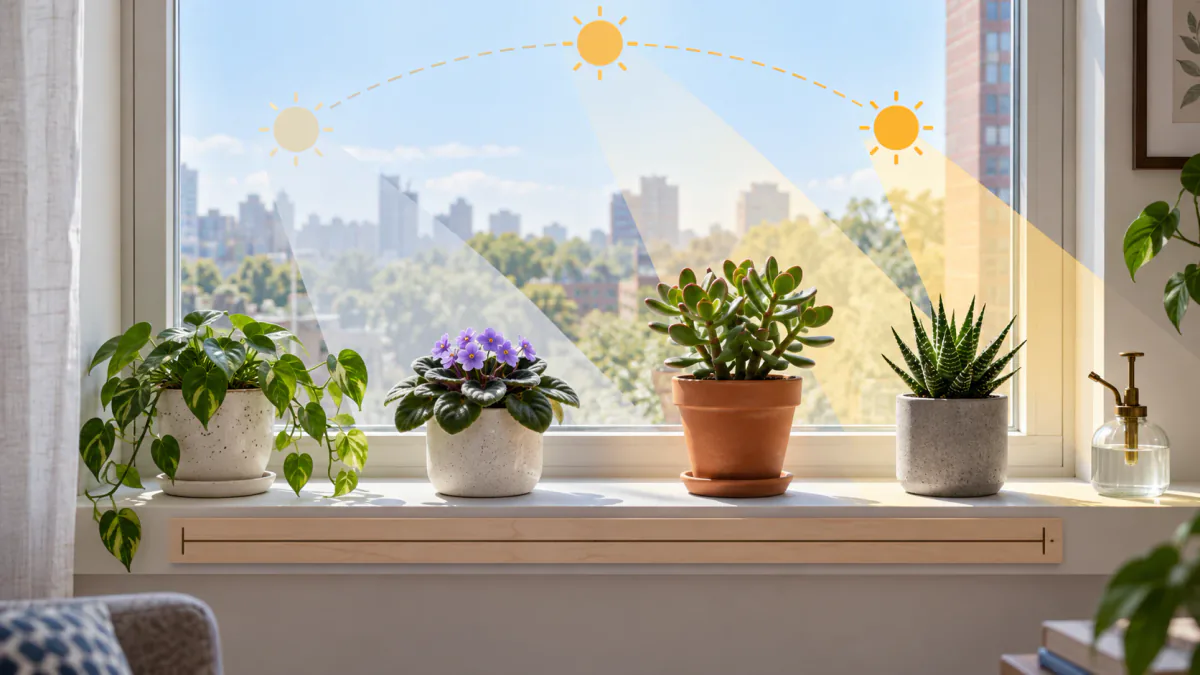
Record the sill's usable width and depth, how the window opens and where water could reach wood, paint or electronics. Observe direct sunlight across the day and note heat from a radiator or drafts. A plant that fits the sill at purchase may later block the window or outgrow the safe footprint.
Match species to observed light
The University of Minnesota Extension's indoor-light guidance recommends choosing plants for the light conditions actually available. Use a species-specific care source to check light, mature size and watering needs. Avoid assuming that every sunny-looking photograph represents the light in your apartment.
Plan watering and access
Use a container and saucer that suit the plant and protect the sill from runoff. Confirm that you can lift the pot safely and clean beneath it. Do not crowd the window latch, blind or ventilation route. If the sill is too narrow, a stable nearby stand may be a better option than balancing a pot on the edge.
Check people and pets
Identify the exact species before purchase. For homes with animals, consult a current source such as the ASPCA toxic and non-toxic plant list; its database is not exhaustive, and plant material can still cause stomach upset. Place plants beyond reach where needed, while remembering that a high sill does not guarantee a cat cannot reach it.
Begin with one plant and observe it through ordinary seasons. Adjust placement when light and temperature change rather than filling the sill before you know what works there.
Measure the window and sill in use
Measure usable sill depth and length, then open the window, blind and curtain fully. Note handles, vents, radiators and the route used for cleaning or emergency access. A pot must fit with a stable base and should not prevent the window or covering from operating normally.
Observe direct light at several times for several days. Record seasonal limitations, drafts and nearby heat sources. Window direction alone does not describe shade from buildings, overhangs or trees.
Match one plant to the observation
Use the recorded conditions to check a plant's light, temperature, mature size and care needs through a reliable horticultural source. The article's ASPCA link can help with pet-toxicity research, but confirm the exact plant identity rather than relying on a common name.
Begin with one plant instead of filling the sill. This makes it possible to observe drying, leaf response and seasonal change without managing conflicting needs. Avoid assuming a struggling plant needs more water; compare its conditions with appropriate care guidance.
Plan water, drainage and surface protection
Use a stable container suitable for the plant and protect the sill according to its material. Provide drainage in a way that prevents water from reaching the wall, floor or electrical equipment. Empty collected water as appropriate rather than allowing the pot to remain in it by default.
Check moisture using the method recommended for the plant and growing medium. A calendar can prompt observation, but it should not replace checking actual conditions. Keep watering tools close enough to use while preventing spills and unsafe access.
Keep the window functional
Leave room to operate locks, curtains and blinds and to clean the glass. Do not create a row of pots that must be moved urgently whenever ventilation is needed. If opening the window creates a fall or wind risk for a pot, use another location.
Review the plan as the plant grows and seasons change. Rotate or relocate only when suitable for the species, and inspect for damage or pests before placing it near other plants. The plan works when the plant receives appropriate conditions while the window remains safe, accessible and easy to maintain.