Check the balcony's limits
Before choosing plants, read building and lease rules for containers, hanging items, drainage and access. Do not estimate structural load capacity from appearance; ask the building or a qualified professional when it is uncertain. Keep doors, exits, railings and maintenance access clear. Never attach planters to a railing without explicit permission and hardware intended for that use.
Observe sun and wind
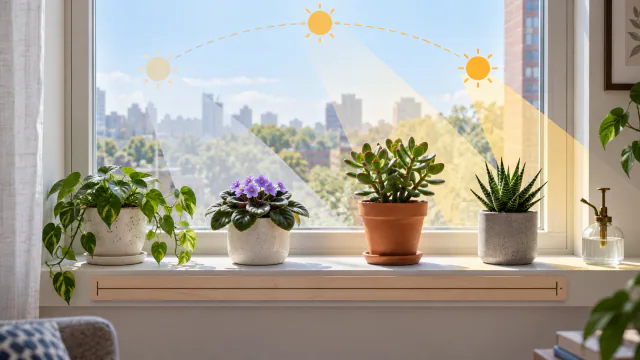
Note when direct sun reaches the proposed corner and whether wind dries or knocks over containers. Observe on more than one day if possible. Choose plant species only after understanding that exposure, then check their care requirements from a reliable grower or extension source. A pretty plant photographed on a balcony may not suit your particular orientation or climate.
Start with one stable container
Choose a container with drainage appropriate to the building's water rules and a stable position away from the edge. Consider how you will carry water, collect runoff and move the container for cleaning. A single manageable plant can reveal the corner's conditions before you commit to a row of pots or a shelf.
Review household safety
If children or pets can reach the area, identify a plant by its exact name and check safety information before bringing it home. The ASPCA plant database is one resource for animal toxicity, though its list is not exhaustive. Recheck the layout after watering and during windy weather; the green corner should remain safe and accessible when conditions change.
Confirm the balcony boundaries
Read the lease and building rules for planters, watering, attachments, screening and objects near railings. Identify the approved usable area without covering drains, access panels or required routes. Do not estimate structural capacity; seek building guidance when weight or attachment is uncertain.
Measure the clear floor area, railing distance and door swing. Include the space needed to step outside, water and move a container. A green corner must remain a corner rather than turning the balcony into an obstacle course.
Observe exposure before choosing plants
For several days, note direct sun, shade, strong wind, reflected heat and how quickly an existing damp cloth or test pot dries. Conditions can change by season and surrounding buildings. Use those observations when checking plant requirements at a reliable nursery or horticultural source.
Choose one plant whose light, temperature and care needs match the observed location. Check toxicity when children or pets may reach it. Avoid choosing several species with conflicting watering routines for the first trial.
Build one container trial
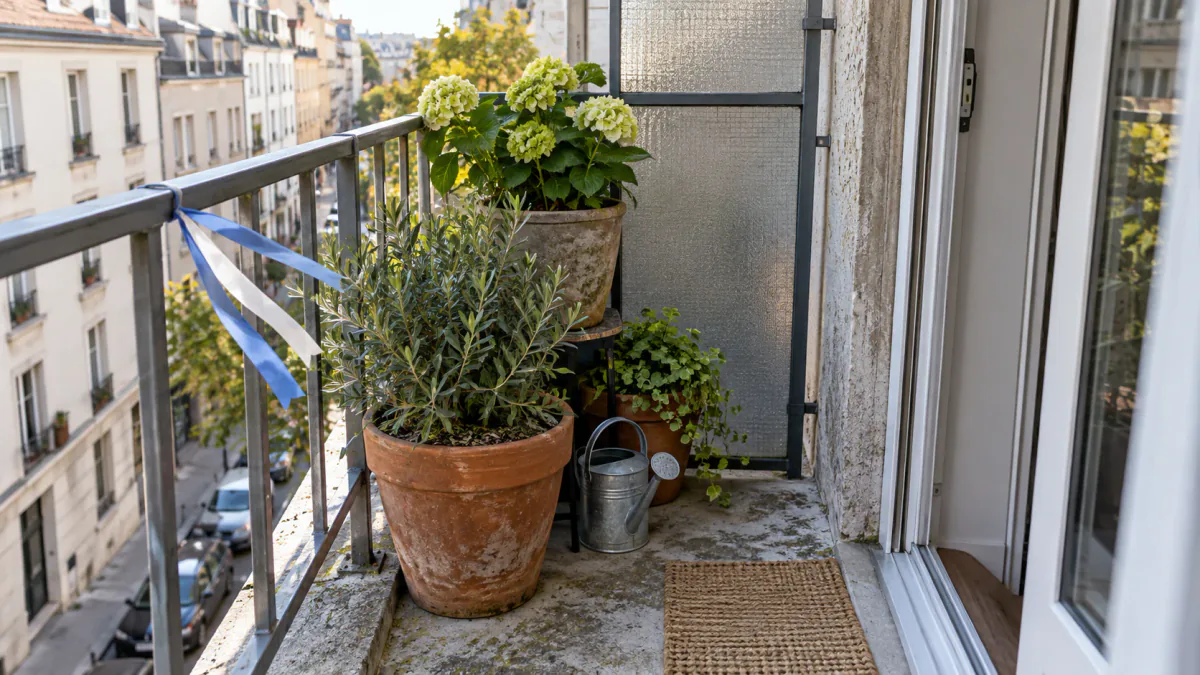
Select a stable container intended for the plant and setting, with drainage managed in a way the building permits. Account for the combined weight of container, growing medium, plant and water. Keep it away from the railing edge and do not attach it overhead or outside the balcony.
Place watering supplies where they can be carried without spilling through the apartment. Observe runoff after watering and correct it immediately if it affects neighbors, surfaces or drainage. Follow the plant and product guidance rather than a universal schedule.
Expand only after the trial succeeds
Maintain the single container through normal weather and routine. Record how often it needs attention, whether wind moves it and whether the route stays clear. If the plant struggles, reassess exposure and care before buying another container.
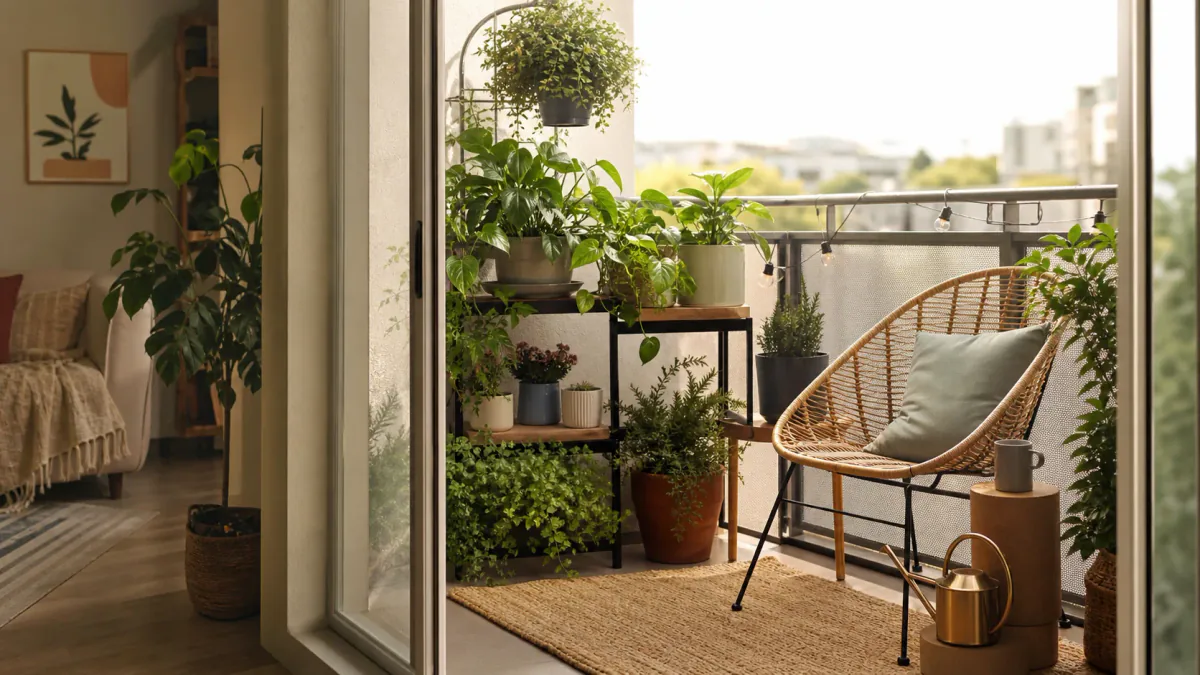
Add a second plant only when it fits the same safe footprint and care capacity. The green corner is complete when it can be watered, inspected and moved as required without blocking the balcony's primary functions.