Friday: choose one friction
Identify the problem the living room creates during a normal week: seating does not face conversation, evening light misses the reading chair, or the entry route cuts through the coffee table. Choose one to solve this weekend. Record the current arrangement and the lease constraints before moving or mounting anything.
Saturday: rearrange before shopping
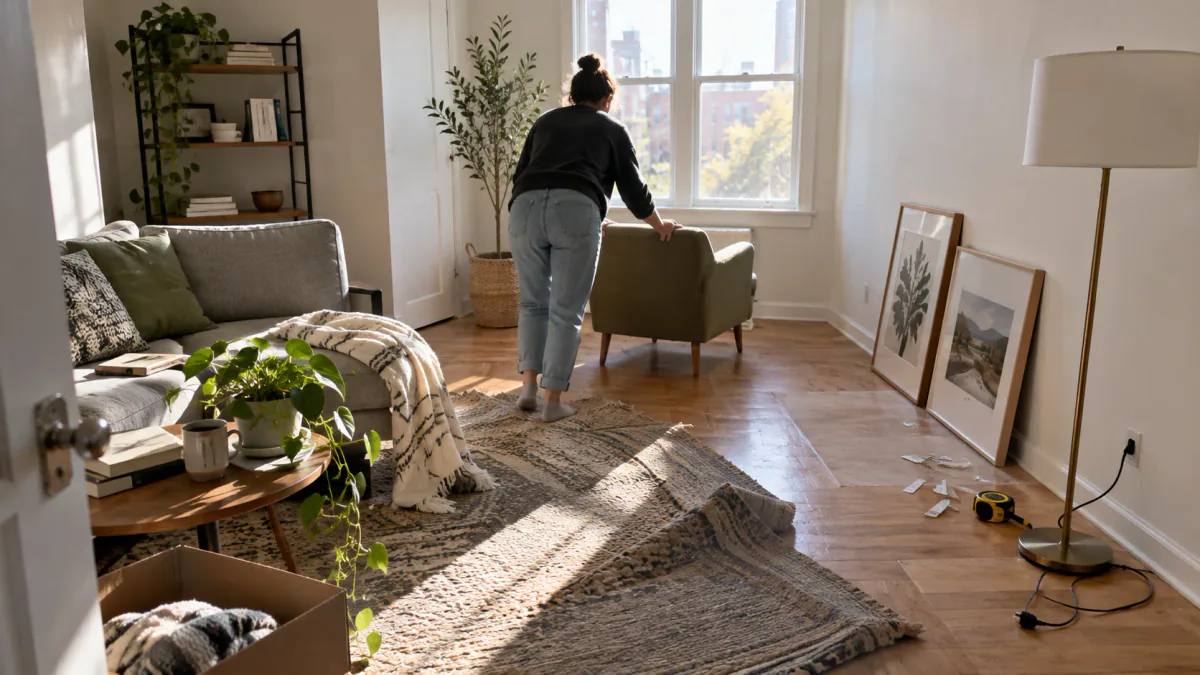
Try the largest existing furniture in a new position. Protect door swings, windows, heaters and the path people use. Use removable floor markers to check a proposed rug or table footprint. If the room has a work corner, test whether the new arrangement leaves that task intact.
Then choose at most one reversible layer that addresses the original friction: a portable lamp for poor task light, a washable rug to define seating, or a small tray for objects that repeatedly land on the floor. Buy only after checking dimensions and return terms.
Sunday: test and restore
Use the room as you normally would and check access to outlets, storage and cleaning. Return tools, packaging and displaced items to their proper places. If the refresh made another task harder, reverse that part. A successful weekend project is an arrangement that remains usable on Monday without new damage or a longer cleanup routine.
Set a weekend boundary before Friday
Choose one functional result, such as a clearer conversation area, a usable reading seat or a surface that can support guests. Photograph the room, list what currently prevents that result and measure only the furniture or route involved. Exclude painting, drilling, large purchases and repairs unless they were already permitted and planned.
Prepare an elsewhere basket and a decision box so sorting does not spread into other rooms. Check the lease before any attachment or alteration. Set a modest spending limit and wait until the rearrangement test identifies a real gap before using it.
Use Friday for editing and observation
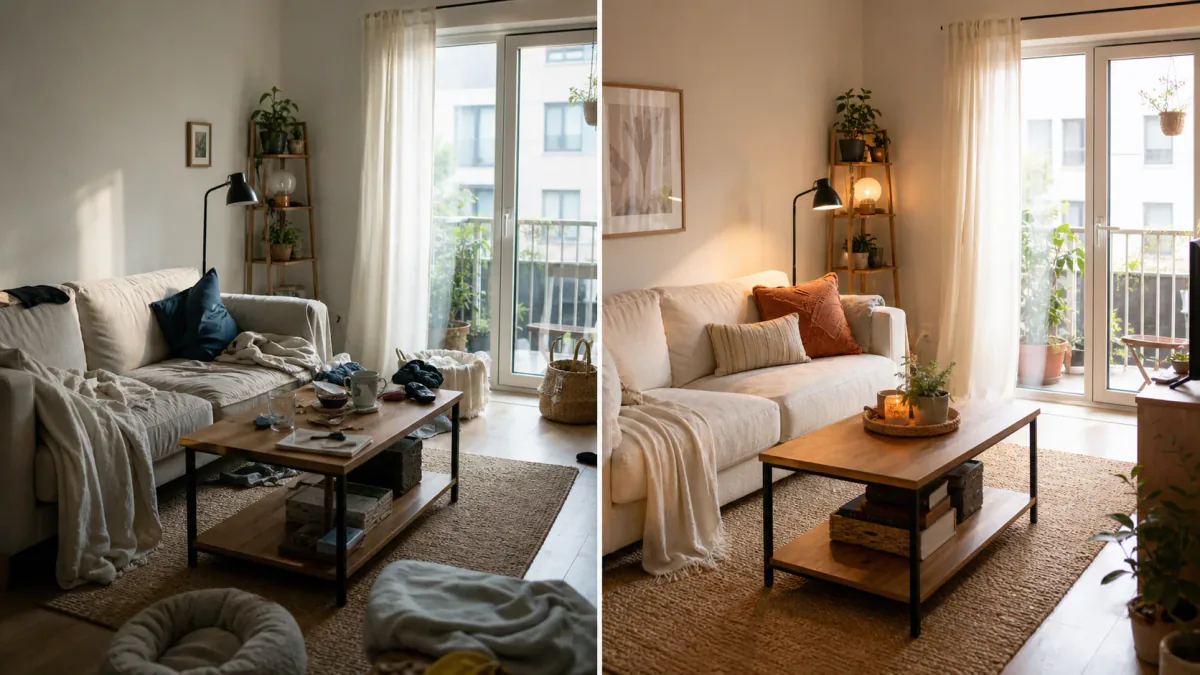
Clear rubbish, return objects with known homes and group the remaining items by activity. Keep essential routes and doors open throughout. Sit in every seat and note the view, available light, reachable surface and conflicts with another activity. Stop after a short session so Saturday begins with evidence rather than exhaustion.
Write two layout options using existing furniture. Each should protect the main route and the room's priority activity. Mark proposed footprints with removable tape if a heavy item cannot be moved safely for a casual trial.
Use Saturday for one layout trial
Move only pieces that can be handled safely and keep cords, heaters, vents and exits unobstructed. Build the main seating group first, then place task lighting and a landing surface. Remove extra small furniture temporarily instead of forcing every piece back into the plan.
Use the room for several hours. Read, watch a screen, talk, eat or work as the household normally would. Record blocked routes, glare and items with no return point. Solve the largest conflict with one change rather than repeatedly rearranging the whole room.
Use Sunday for color, storage and reset
Once the layout works, repeat one existing color or texture with items already owned. Edit unrelated small decor before adding a new layer. Assign storage to remote controls, current reading, charging items or work materials based on where they are used.
Clean accessible surfaces appropriately, return the decision box to its scheduled review place and photograph the finished functional arrangement. Write a three-step reset for the coming week. A successful refresh improves ordinary use by Sunday evening and leaves no repair or disposal project for Monday.