Protect the room's main job
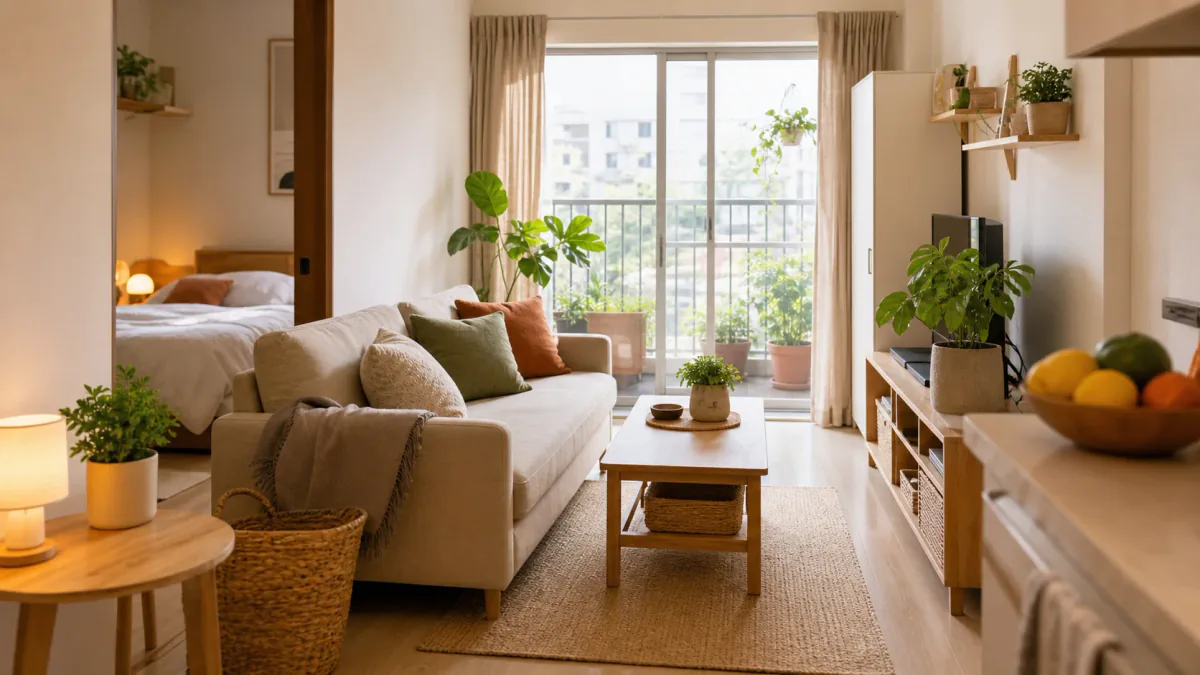
Decide whether the living room primarily supports conversation, television, reading, work or several of these. Arrange the largest existing seat around that task and leave a clear route from the entry. Warm minimal style works poorly if a handsome chair blocks the passage or a coffee table leaves no place to stretch out.
Build warmth with movable layers
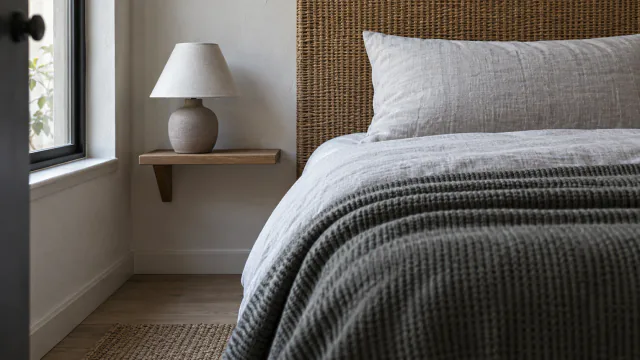
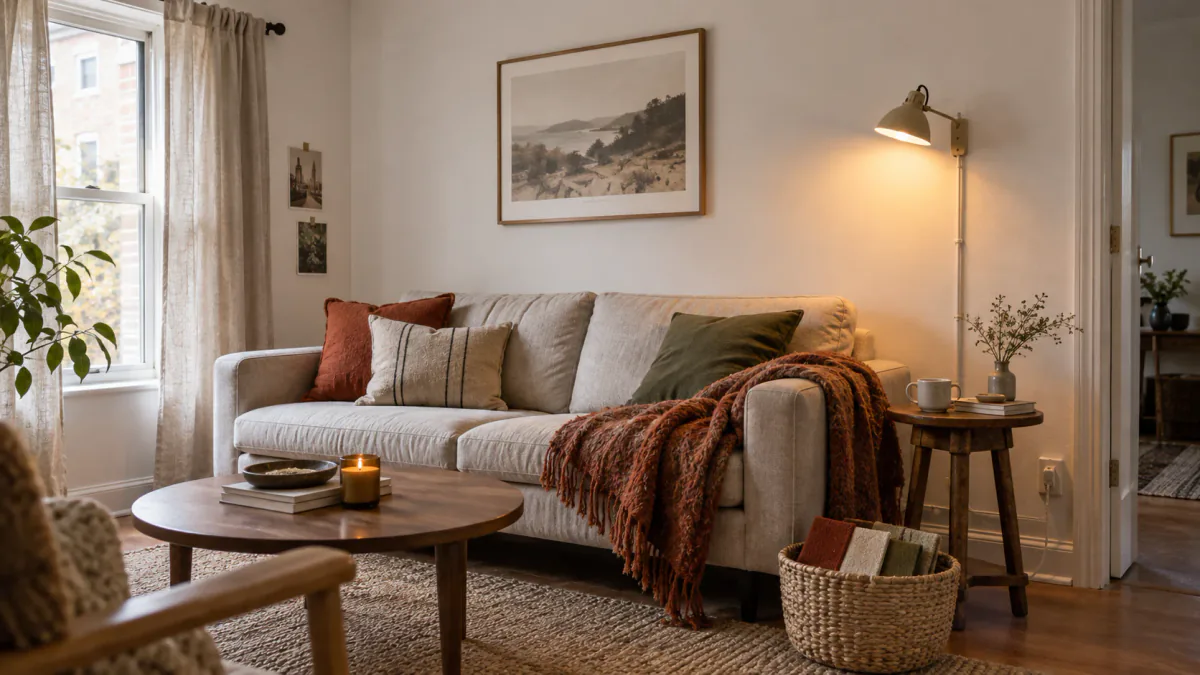
Start with one textile that feels good in use, such as a rug or throw, then add a lamp where a task happens after dark. Compare the colors with the floor and upholstery already in the rental. A limited set of materials can feel coherent without buying matching furniture. Keep a storage place for spare textiles so warmth does not become a pile.
Work with the rental's fixed elements
Notice window placement, heating equipment, outlet locations and lease limits before planning shelves or wall finishes. Freestanding furniture and portable lamps are easier to reverse than changes to the wall. Follow product instructions for cords and furniture stability; check permission before drilling or painting.
For example, if the sofa is already comfortable but the only lamp sits behind it, move the lamp beside the reading end before buying another. If the floor feels bare, mark a potential rug outline and check whether it catches the door or forces the coffee table into the route. Either trial reveals more than ordering a coordinated set from a styled photo.
Edit after a normal evening
Use the room for an ordinary evening, then note which surface holds a drink, where a book lands and whether a lamp reaches the seat. Remove decorative objects that compete with those uses. The result should feel warm because the room supports its occupants, not because every corner has acquired an accessory.
Define what warm and minimal mean in this room
Translate the style words into visible decisions. “Warm” might mean a comfortable reading light, natural-looking texture and colors related to the existing floor. “Minimal” might mean a clear route, one dependable surface and closed storage for equipment. This definition prevents the project from becoming a shopping list of beige objects.
Inventory fixed finishes, existing furniture and rental restrictions. Photograph the room in daylight and at the time it is used most. Identify the largest color areas and anything that cannot move. A successful plan connects to those conditions rather than hiding all of them under new decor.
Start with functions and routes
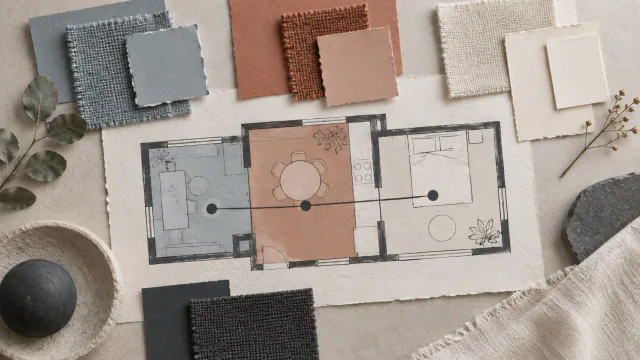
List the room's regular jobs in priority order: conversation, television, reading, work, play or guest sleeping. Give the highest-priority activity a comfortable orientation and appropriate light. Draw routes from the entrance to seating and onward to adjacent rooms, then test them with cabinet doors and chairs in use.
Group seating closely enough for the intended activity instead of pushing every piece against a wall automatically. A small room can feel calmer when furniture forms one readable group and leaves a clear route behind or beside it. Use removable tape to test an unfamiliar footprint before moving or buying a large piece.
Build a restrained palette from existing finishes
Choose a base already present in the floor, sofa or curtains, then add one supporting color and a limited darker note for definition. Repeat each intentionally in more than one place, but vary the material so the room does not look like a matching set. Sample textiles beside the fixed finishes in both daylight and lamp light.
Warmth can come from texture and light rather than added color. A woven throw, matte ceramic or wood-toned object may be enough when the room already has several hues. Edit competing small accessories before adding another layer. Leave some surfaces partly empty so useful objects remain easy to see and return.
Layer light for the activities
Map the ceiling light, window and existing outlets. Add task light where someone reads or works and softer ambient light where the room needs evening balance. Keep fixtures out of walking routes, control glare on screens and follow electrical and product instructions. In a rental, favor plug-in solutions that comply with the lease.
Turn on only the lights used during a normal evening and inspect the corners that disappear. Repositioning one lamp may solve the problem better than several decorative lights. Check the arrangement from each seat rather than judging it only from the doorway.
Contain daily life without erasing it
Assign nearby storage to the room's active categories: current reading, remote controls, charging items, children's materials or work supplies. Use a tray or portable kit for objects that must move when the activity changes. Closed storage is useful for visually mixed equipment; open storage works for a small group that is easy to maintain.
Set a capacity for each category and plan where overflow goes. A basket is not a solution if it must be emptied onto the sofa to find one item. The room should reset through a few obvious actions: return the portable kit, fold the throw and clear the primary surface.
Test the complete room before purchasing
Live with the rearrangement for several evenings and one busy day. Note blocked routes, insufficient light, surfaces that collect unrelated objects and seats nobody chooses. Solve those observations in order. Purchase only when the trial identifies a specific missing function, size and storage location.
The finished living room should support its priority activities, reset without a long cleanup and feel coherent with the rental's existing finishes. Warm minimalism is achieved when useful layers feel inviting and unnecessary decisions have been removed, not when the room reaches a fixed number of possessions.