Start with what touches the bed
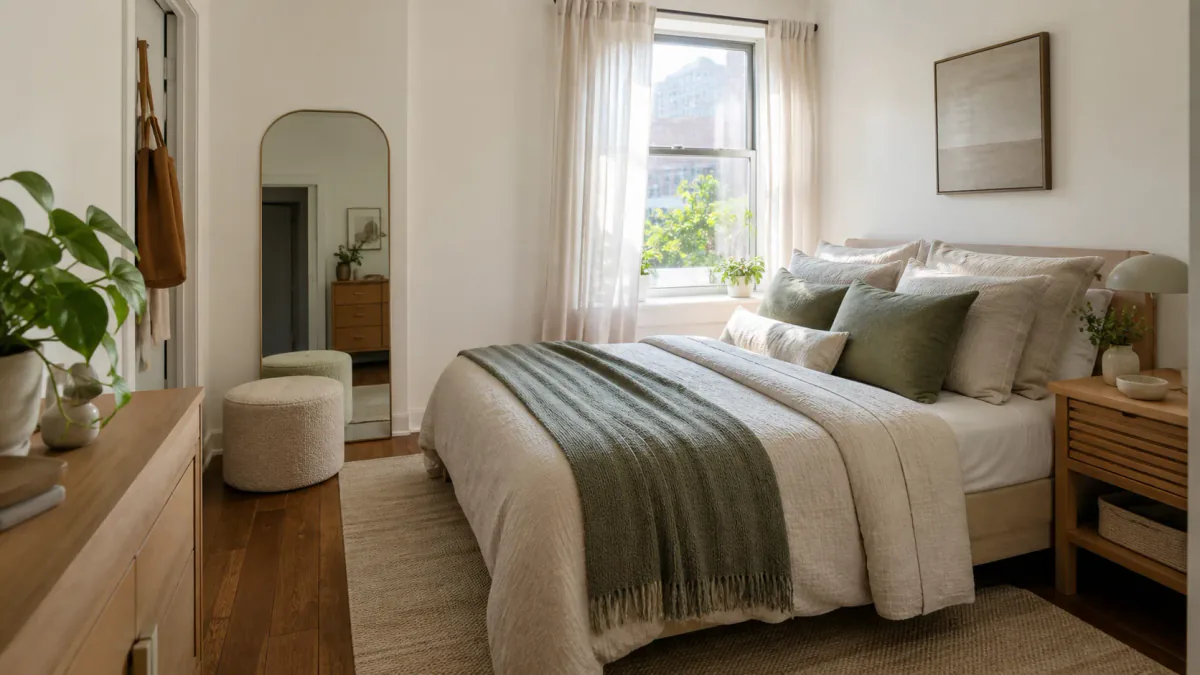
Texture is most useful where it changes comfort. Begin with bedding appropriate to the room's temperature and your laundering routine. A heavy extra throw can look inviting but become a daily obstacle if there is nowhere to put it at night. Choose a layer only when it serves warmth, comfort or a deliberate visual contrast.
Keep the bedside surfaces usable
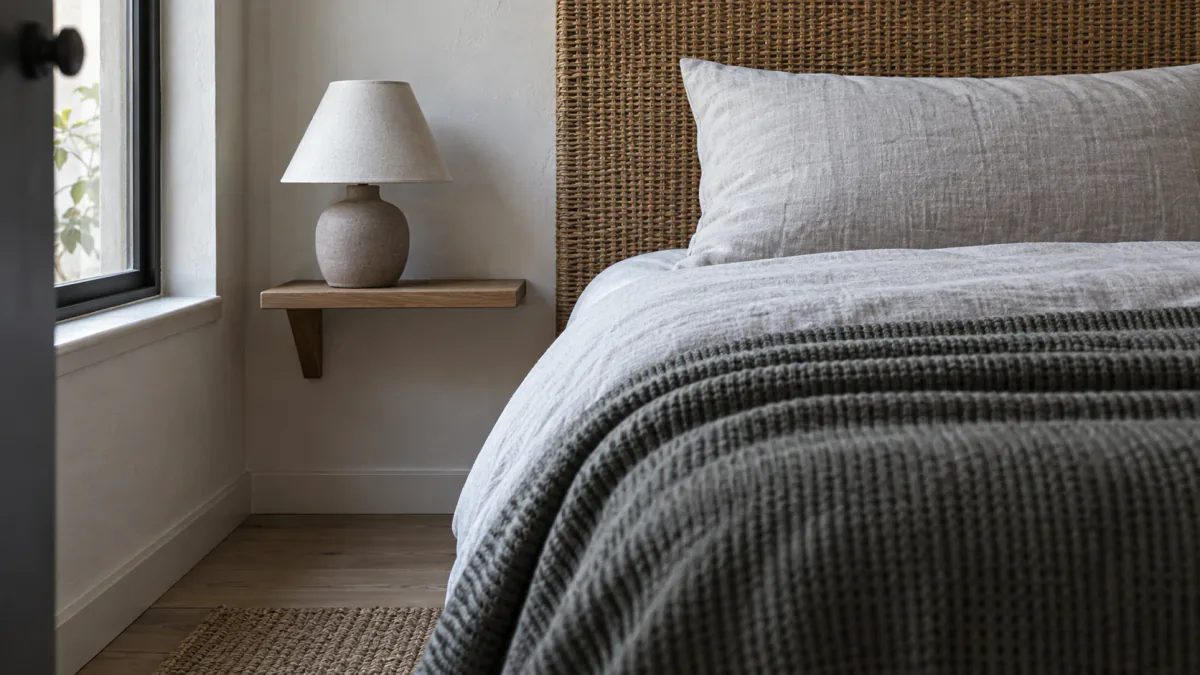
Leave room for the objects needed before sleep and on waking. Use a lamp, a water glass or a book to test the available space. If decorative trays and objects leave no working area, reduce them. Fabric at the window can add softness, but first check the window's opening, heating clearance and rental rules.
Vary one material at a time
Compare the current room's smooth and rough surfaces. A woven basket, upholstered headboard or textured cover may be enough contrast; adding all three at once can crowd a small bedroom. Repeating one tone across different materials can create a calm link without making every object identical.
A workable sequence might be a smooth washable duvet, one textured cover for colder nights and curtains selected for the light you need to control. That gives each layer a separate job. If a new cushion has no use or storage place, leave it out even if its fabric matches the palette.
Give every layer a reset place
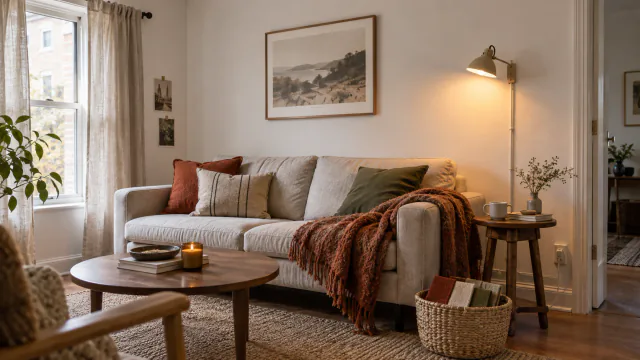
Before buying a cushion or seasonal blanket, decide where it will live while the bed is in use and how it will be cleaned. If the chair is already a clothing drop zone, do not assign it another decorative layer. A textured bedroom stays comfortable when the layers can be moved, washed and returned without extra clutter.
Inventory texture already in the room
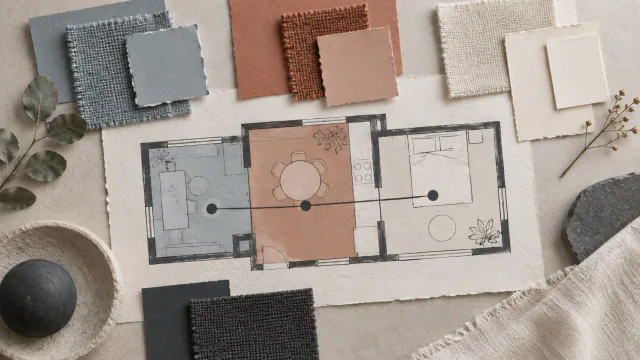
Start with the surfaces that cannot easily change: flooring, walls, window coverings, bed frame and wardrobe. Add the bedding, rug and upholstered pieces already present. Describe each by visible quality—smooth, woven, matte, reflective, soft or strongly patterned—rather than by shopping category. The list often shows that the room has enough variety but lacks a clear order.
Photograph the bed wall and the view from the doorway in daylight and at night. Notice where several small textures compete and where one large flat area feels unfinished. Choose one of those conditions to solve. A focused goal such as “soften the bed area while keeping the chair empty” is more useful than adding texture everywhere.
Build layers from large to small
Begin with the largest useful textile, usually bedding, curtains or a rug. Let that layer establish the dominant texture. Add a second layer that differs in scale without fighting it: crisp bedding with a loosely woven throw, or a plain rug beneath subtly patterned fabric. Small accessories come last and should support a function such as light control, warmth or comfort.
Avoid distributing many tiny textured objects across every surface. They create more edges to process and more pieces to move during cleaning. One substantial layer can provide more visual depth than several baskets, cushions and ornaments. Before adding a new item, identify which existing layer it replaces or complements.
Give every removable layer a storage plan
Decide where an extra blanket, seasonal cover or decorative cushion goes when it is not in use. Measure the drawer, shelf or under-bed container before choosing the item. If the only storage plan is the floor or a chair, the layer will become clutter during ordinary routines.
Keep frequently used bedding easy to reach and avoid compressing materials in ways their care instructions discourage. Label seasonal containers if their contents are not visible. A one-in, one-out limit for bulky textiles can protect scarce storage without forcing every category to follow the same rule.
Use hard materials selectively
Texture does not have to mean fabric. A wood-toned frame, matte ceramic lamp or small metal detail can add contrast while remaining easy to clean. Repeat one hard material in two useful locations rather than assembling unrelated decorative objects. Check that reflective finishes do not create glare from the bed or compete with a mirror.
Rental-safe additions should remain stable and follow the lease and product instructions. Do not lean heavy art or mirrors where they can fall, and do not assume removable adhesive is suitable for every finish. When attachment is uncertain, choose a freestanding useful object or leave the surface open.
Test the room through a normal week
Make the bed, get dressed, handle laundry and clean the room with the proposed layers in place. Count which objects must be moved and where they wait. Check whether the rug catches a door, whether the throw falls to the floor and whether textured surfaces collect visible dust faster than you are willing to maintain.
Remove the layer that creates the most handling without supporting comfort or function. The finished room should feel warmer or more dimensional while the bed, chair and walking route remain usable. Texture is successful when it survives laundry day and bedtime, not only when the room is photographed.