Map tasks after sunset
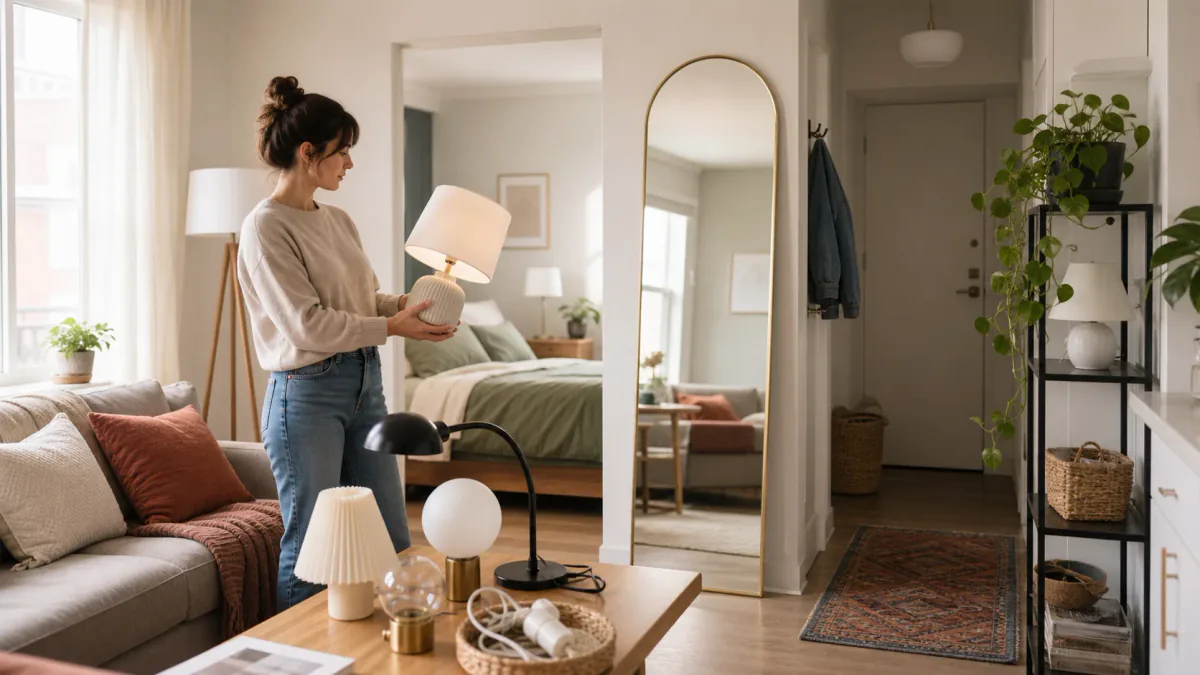
Stand where you read, prepare food, dress and leave the apartment after dark. Note which task is poorly lit and whether an existing lamp can be moved. A renter can often improve a task with a portable light before changing fixtures. This guide compares roles rather than claiming to have tested particular products.
Match a light to its job
| Need | Useful format | Check before buying |
|---|---|---|
| Reading in one seat | Adjustable floor or table lamp | Glare, reach of the switch, cord route |
| Work on a desk | Focused task lamp | Desk footprint and screen reflection |
| General evening movement | Portable ambient lamp | Stable placement and outlet access |
Compare the lamp's dimensions, bulb compatibility, electrical certification where applicable, return policy and current manufacturer instructions. Keep cords out of walking paths and avoid overloading outlets. Ask a qualified professional about electrical work rather than altering rental wiring yourself.
Place a mirror for a useful reflection
Decide whether the mirror is for dressing, reflecting daylight or seeing a room from another position. Hold a temporary cardboard outline at the proposed size and check what it will reflect from the normal seat and doorway. A mirror opposite clutter or harsh light may amplify a problem instead of solving it.
Check its weight and the manufacturer's mounting instructions. If safe wall mounting is not permitted or feasible, use a stable freestanding design only where it will not tip, obstruct a door or narrow a route. The purchase is worthwhile when it serves a defined task in the actual room.
Map activities before choosing fixtures
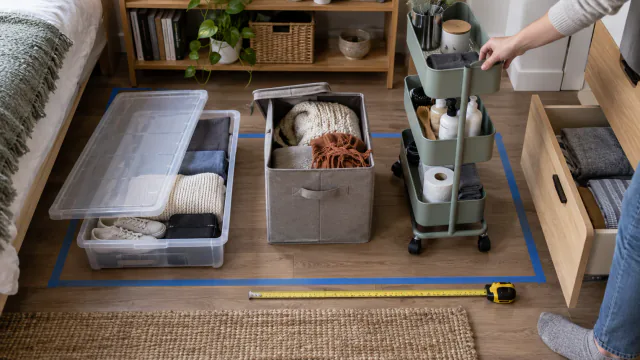
Draw the room and mark where reading, food preparation, desk work, dressing and circulation actually happen. Add windows, existing fixtures and usable outlets. Note the time each activity occurs; daylight cannot solve an evening task, and a bright ceiling light may not reach a work surface blocked by the user.
For each location, write the job of the missing light: illuminate a page, reduce a dark route, show color at a mirror or soften the room after work. This separates functional gaps from the desire for another decorative lamp. Measure the proposed surface and cord route before shopping.
Combine ambient, task and accent light deliberately
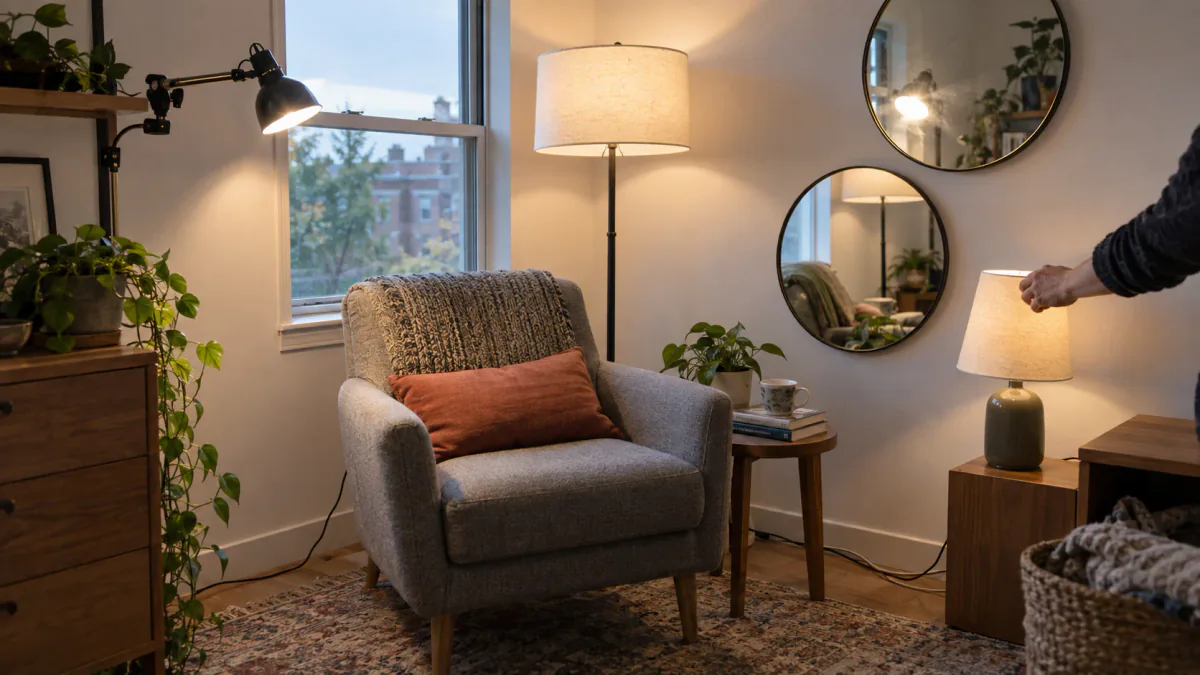
Ambient light supports general movement, task light serves a specific activity and accent light draws attention or balances a dark area. A compact room may use one fixture for more than one role, but the priority should remain clear. A shaded floor lamp can add ambient light while directing useful light toward a chair; a small desk lamp should first make the desk comfortable.
Turn on existing lights one at a time and photograph the room from each seat. Look for glare, deep shadows and bright bulbs in direct view. Reposition a fixture or change its direction before adding another. Follow the fixture's bulb, ventilation and placement instructions, and keep cords away from routes and doors.
Place mirrors for a specific result
Decide what the mirror should reflect. Opposite or beside a window it may redistribute a bright view, while opposite an open shelf it will duplicate visual clutter. From the main seat and entrance, hold a lightweight stand-in or use a helper to test the sightline. Check the reflection at night as well as during the day.
A dressing mirror needs an unobstructed standing position and useful light on the person rather than behind them. A decorative mirror should relate to the furniture or zone beneath it instead of floating in an arbitrary gap. Avoid positions that reflect a bare bulb, screen glare or a private area visible from the entrance.
Choose rental-safe placement
Check the lease before drilling or altering electrical components. Freestanding and plug-in solutions may reduce permanent changes, but they still need stable bases and safe cord management. Heavy mirrors require mounting appropriate to their weight, hardware and wall construction; do not rely on an adhesive product unless its instructions explicitly support the surface and load.
Record wall condition before installation and retain hardware instructions for move-out. If secure mounting cannot be confirmed, select a smaller stable mirror or a different location rather than improvising. Safety and full door operation take priority over a preferred composition.
Test an evening sequence
Use the room from arrival through bedtime with only the proposed lights. Walk the routes, prepare food, work or read and view yourself in the functional mirror. Note every time you move a lamp, encounter a cord, see glare or need to turn on an unrelated fixture.
The arrangement is complete when each priority task has suitable light, circulation remains clear and every mirror reflects something intentional. Check that frequently used controls remain reachable from the activity they serve and that no fixture blocks storage. Additions should reduce effort and improve orientation; if the room requires many switches and portable fixtures, simplify the layers and retest.