Set a scope that fits one week
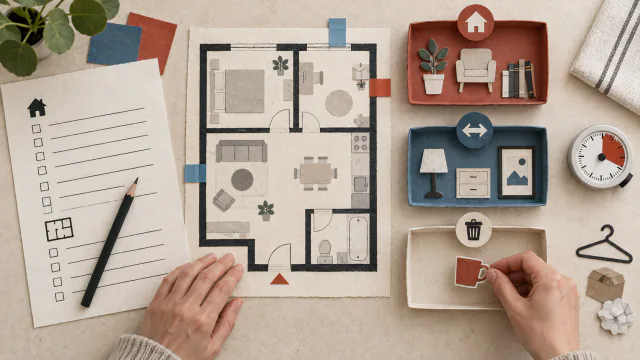
Pick one area that repeatedly fails in daily use, such as the entryway, kitchen counter or bedroom chair. Keep a separate “later” list for other rooms. The seven days below are a sequence for making one area easier to use; they do not promise a transformed home or require a purchase.
- Day 1 — Observe: Note when the area becomes difficult and what activity it is meant to support.
- Day 2 — Empty safely: Remove only the loose items in the chosen area. Keep essential routes and appliances accessible.
- Day 3 — Decide: Group items by use. Keep what belongs here; return other items to their actual homes; set aside uncertain items for a later decision.
- Day 4 — Clean: Clean the now-accessible surface with care appropriate to its material. Do not mix products or use a cleaner contrary to its label.
- Day 5 — Assign: Put frequent-use items where they can be reached and returned with minimal extra steps. Avoid filling every inch of capacity.
- Day 6 — Test: Use the area for its normal task. Note anything you must move, search for or clean up twice.
- Day 7 — Review: Keep the parts that survived ordinary use; revise or remove the rest.
When the week is interrupted
Pause rather than trying to make up multiple days in one exhausting session. If the chosen area contains repairs, mold, pests or unsafe electrical conditions, a decluttering schedule is not the remedy; seek appropriate building or professional help. The cure is complete when the chosen task works more smoothly and its storage can be maintained, even if the rest of the apartment is unchanged.
Choose one zone and protect the scope
Select an area that affects daily life but can be changed without renovation: an entry, bedside route, dining surface or one kitchen work zone. Write the outcome in functional terms, such as opening the closet freely or preparing a meal without clearing unrelated objects. Do not choose the whole apartment; the seven-day limit works only when the boundary is real.
Prepare three destinations outside the zone: items that belong elsewhere, items leaving the household and items requiring a decision from someone else. Keep exits, heaters, vents and walking routes clear throughout the project. The zone should remain usable every night, even when the day's work is unfinished.
Days one and two: observe, then remove obstacles
On day one, use the area normally and record each interruption. Note what you reach for, where it comes from and what blocks the action. Measure doors, furniture and storage only where a possible change depends on them. Take a starting photo for your own comparison, without staging it first.
On day two, remove rubbish, obvious recycling and objects that clearly belong in another room. Return only items with an existing home; place uncertain items in the decision container. Stop before reorganizing drawers. The aim is to expose the actual space and routine, not to make permanent choices while tired.
Days three and four: define categories and test access
On day three, group what remains by the action it supports. Entry items might become current footwear, weather gear, outgoing returns and keys. A dining surface might divide into meals, current paperwork and activities that need a portable kit. Give each category a capacity limit based on the available safe space.
On day four, assign temporary homes using containers already available. Put frequent items within easy reach and occasional items farther away. Open every nearby door and drawer, sit or stand where the activity occurs and return each item with one hand when practical. Revise any position that demands several extra steps.
Days five and six: live with the system
Day five is a normal-use test. Do not improve the area for the test; let work, meals, deliveries or bedtime happen as usual. At the end of the day, count objects left outside their assigned places and ask whether the failure came from unclear categories, inadequate capacity or an inconvenient return point.
On day six, fix only the recorded failure. Reduce an overfilled category, move a container closer or split two activities that compete for one surface. Decide the contents of the decision container with the relevant household member. Avoid buying an organizer unless the trial identifies its exact size, position and job.
Day seven: close the project and plan for interruptions
Reset the zone once, clean accessible surfaces appropriately and compare it with the outcome written on day one. Record what changed, what remains imperfect and the cue that will trigger maintenance. A weekly cue should take only a few minutes and protect the function rather than recreate a styled photograph.
If the week is interrupted, resume the next numbered day instead of doubling the work. Keep the area safe and return loose project items to the temporary container. The cure is complete when the chosen activity works reliably; unfinished decisions can become a later project rather than extending this one indefinitely.