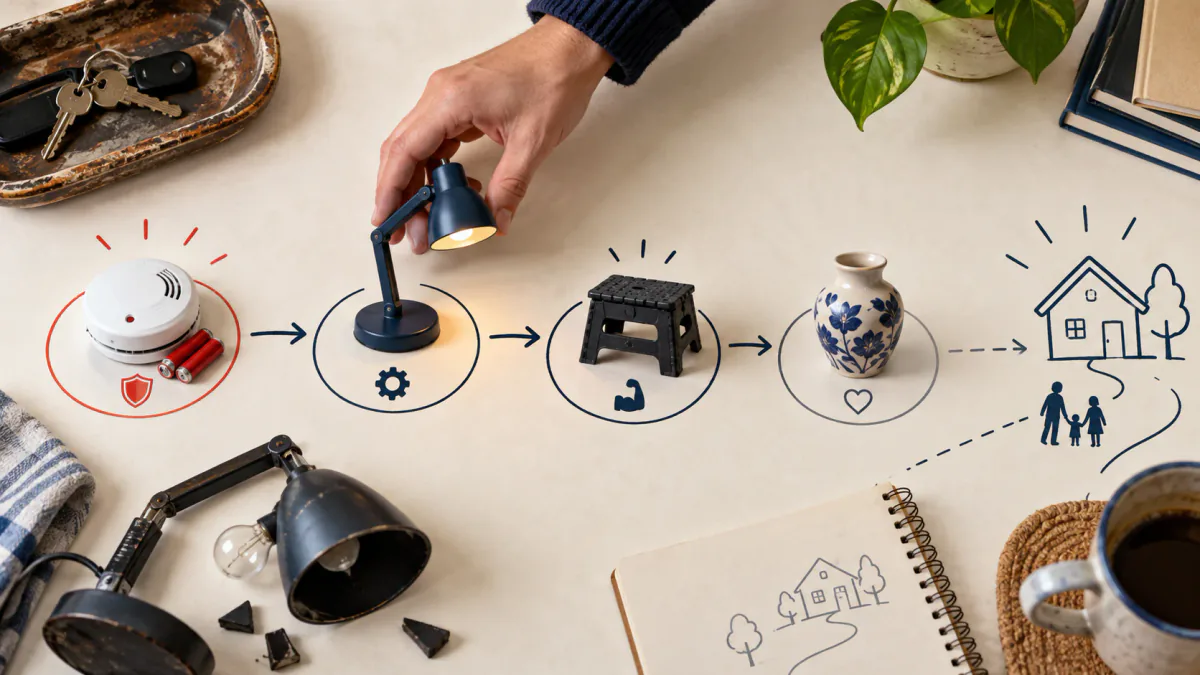
List repeated friction before wishes
For one week, note each problem that interrupts a routine: a desk lamp that does not reach the work surface, a bag with no landing place, or dishes stacked where food is prepared. Keep style wishes on a separate list. A repeated problem is a better purchase candidate than an attractive object without a job.
Compare options with five questions
- How often does the problem occur?
- What happens if it is left alone?
- Can rearranging or removing something solve it?
- Will the product fit and remain usable with doors, drawers and people in motion?
- Can it move with you or be removed under the lease?
Give priority to a safe, frequently used improvement that fits the rental. Delay items whose measurements, installation permissions or total cost are uncertain. A decorative upgrade may still be valuable, but it should not silently displace a more urgent functional need.
Price the full cost
Record the current price, delivery or installation charges, supplies, maintenance, return conditions and the floor or storage space the item will occupy. A cheap unit that requires a special anchor or blocks a route may be a poor choice. These figures change, so check the seller and manufacturer at the time of purchase.
Buy one and review
Try the highest-priority item before purchasing a matching set. Keep documentation until it has survived normal use and the return period. If it does not remove the original friction, return or relocate it where permitted and revise the problem statement. This is a decision method, not a product ranking or a claim of hands-on testing.
Separate a real need from temporary friction
Describe the problem for one week before shopping. Record when it appears, who encounters it and what workaround is currently used. A missing bedside light is a recurring function gap; a pile created during one unusually busy weekend may need a reset rather than furniture. Count the interruptions instead of relying on how frustrating the problem feels at one moment.
Check whether moving, removing or reassigning an existing item solves the issue. Borrow or prototype where practical. A box can test the footprint of a side table; removable tape can represent a rug or shelf. The trial should reveal the required dimensions and features before price or appearance narrows the choice.
Score portability and fit for this home and the next
Measure the intended location, doors, stairs and elevator. Add the product's working footprint: chairs pull back, drawers extend and folding furniture changes size. Then consider whether the item can be disassembled, carried safely and used in a different layout. Highly room-specific pieces deserve extra scrutiny when a move is likely.
Use a simple rating of strong, conditional or poor for current fit, future flexibility and ease of moving. Do not turn the ratings into a false mathematical answer; use them to expose trade-offs. A perfect current fit may still be reasonable when the need is essential and alternatives fail.
Calculate the full cost of ownership
Add delivery, assembly tools, installation hardware, protective pads, replacement parts and likely move-out repair. Include the time and transport needed to sell, donate or dispose of the item. For textiles and upholstered goods, consider the cleaning routine and whether available machines or services can handle them.
Set a budget before comparing finishes. If a purchase requires sacrificing a higher-priority safety, sleep or work need, postpone it. Avoid financing a decorative solution to a problem that has not survived a free trial. Keep receipts, care information and spare hardware together so the product remains easier to maintain and move.
Rank purchases by consequence
Give first priority to items that support sleep, essential work, safe circulation or a daily meal routine. Next consider products that remove repeated handling or protect something already owned. Decorative upgrades come after the room's key actions work. This order can change with household needs, but it makes the reason explicit.
Compare only products that solve the same defined problem. A storage bench, wall shelf and set of hooks may all address the entry, but they impose different footprints, installation requirements and capacities. Eliminate any option that violates the lease, blocks movement or lacks suitable instructions before comparing style.
Write an exit plan before buying
Decide where the item goes if it fails the trial or no longer fits after a move. Record the return window, resale practicality, donation route or material-specific disposal option available locally. Avoid assuming a large item will be easy to give away at short notice.
A purchase is ready when the problem is recurring, measurements are verified, the product fits the lease and route, full cost is acceptable and an exit path exists. Wait twenty-four hours after reaching that conclusion when the need is not urgent; the pause helps separate a supported decision from shopping momentum.